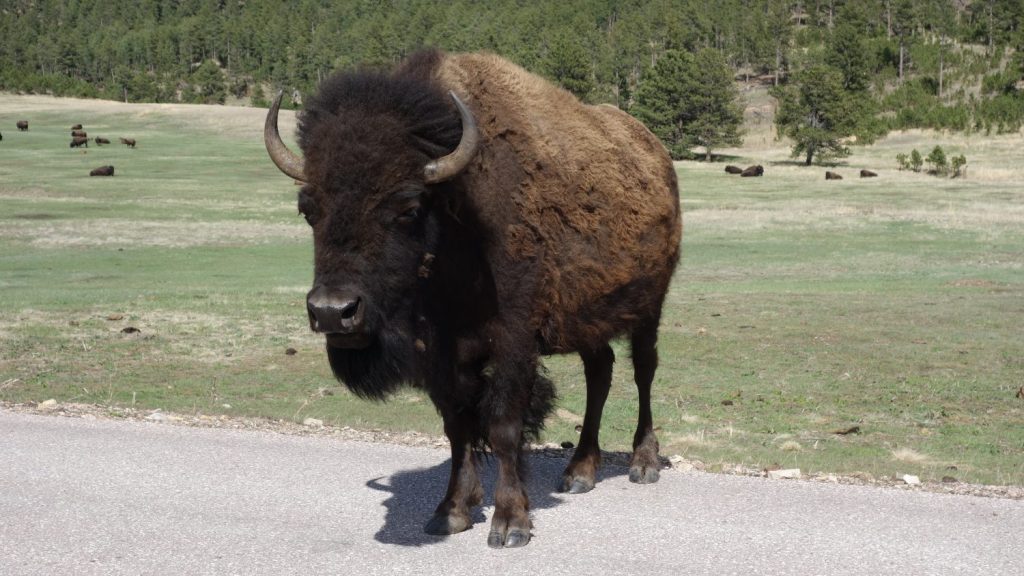
The Fort Peck Tribes proved it can be done.
The federal government is working to preserve buffalo through a new proposed plan.
Department of Interior Secretary Deb Halland recently introduced Order No. 3410 regarding the Restoration of American Bison and the Prairie Grasslands.
“It won’t surprise you that I teared up when I signed the document,” Halland said. “I was thinking about how the federal government tried to erase Indigenous people in so many ways, taking their land, taking their children, taking their lives and taking away the bison that were so central to many tribal nations’ lifeways. But you know that the bison are still here, and the Indigenous people are still here.”
The order was signed on March 3, 2023, and it calls for action to further the restoration of the American bison and natural prairie grasslands that existed before westward expansion of the United States.
This past winter, over 1,000 animals in Yellowstone National Park were harvested during the winter. Park officials expect the population to drop to as low as 4,800 in the next couple weeks.
Through their efforts, the government managed to relocate over 20,000 buffalo to numerous locations throughout the country, including the Fort Peck Indian Reservation.
On the reservation, a range unit with hundreds of acres of land was set aside. Rather than slaughter all migrating buffalo outside the park, the Department of Interior will be working to preserve the species by working with other agencies to relocate the animals on federal and tribal lands on the plains.
Starting in 1999, the Tribes started a buffalo herd from animals crossbred with cattle. This herd eventually became the Tribes “business herd.” In 2012, the Tribes accepted buffalo from Yellowstone National Park and started the “cultural herd.”
Today, both herd collectively total over 1,000, with slightly more in the cultural herd.




Leave a Reply