FORT PECK RESERVATION — A Fort Peck tribal member who says she nearly lost her life after becoming addicted to kratom is renewing her call for the Fort Peck Tribal Executive Board to ban commercial sales of the substance on the reservation, as lawmakers and public health officials across the country move to restrict its availability.
Danelle Kawasaki, an enrolled member of the Fort Peck Assiniboine and Sioux Tribes, has been sharing her experience publicly in hopes of preventing others from suffering the same ordeal.
Kawasaki said she developed a severe physical dependence on kratom after initially trying it as a relaxing herbal drink at a Billings establishment that marketed itself as a nonalcoholic or “dry bar.”
What began as an occasional weekend drink eventually became a daily habit, followed by increasing consumption, physical dependence and debilitating withdrawal symptoms.
“I begged for death. My bones felt like they were twisting inside of my body. My teeth felt like they were falling out of my head,” Kawasaki wrote in her original public account.
She said the worst withdrawal symptoms lasted approximately five days, followed by weeks of physical recovery and months of emotional difficulties.
Kawasaki, who had been alcohol-free for more than a decade when she first tried the drink, said she initially believed she was consuming a harmless herbal product.
“I was curious since I was sober and I had heard good things about the business from other people,” Kawasaki told the Journal. “So I decided to try it. Under the impression that it was an herbal relaxing tea.”
During an interview with the Journal, Kawasaki explained that the establishment served green and white varieties of kratom tea, marketed respectively for relaxation and energy. Customers could add kava, another psychoactive plant, along with flavorings and other ingredients.
She confirmed that her first drink contained both kratom and kava.
“There was kava in that one. I didn’t know what to order so I told the kavatender to get me whatever everyone else was drinking,” she said.
Kawasaki recalled that the drinks were often brightly colored and resembled beverages sold at coffee shops.
“It legitimately looked like a pink drink from Starbucks,” she said.
She also said she was not initially warned about the possibility of physical dependence, although she recalled the establishment posting informational flyers several months after she began visiting.
As her use increased, Kawasaki said she began waking up physically ill unless she consumed more kratom. She described experiencing body aches, vomiting, sweating, shaking and severe weakness when she attempted to stop.
In 2024, she said she experienced what she believed was an overdose and was taken to a hospital. Afterward, she endured an extended period of withdrawal and recovery.
Kawasaki said she eventually sought therapy, rebuilt her life and decided to use her experience to educate others about the substance.
What Is Kratom?
Kratom, scientifically known as Mitragyna speciosa, is a tropical tree native to Southeast Asia and a member of the coffee family.
Its leaves have been used traditionally in countries such as Thailand and Malaysia, where people have chewed them or brewed them into tea for their stimulant and pain-relieving effects.
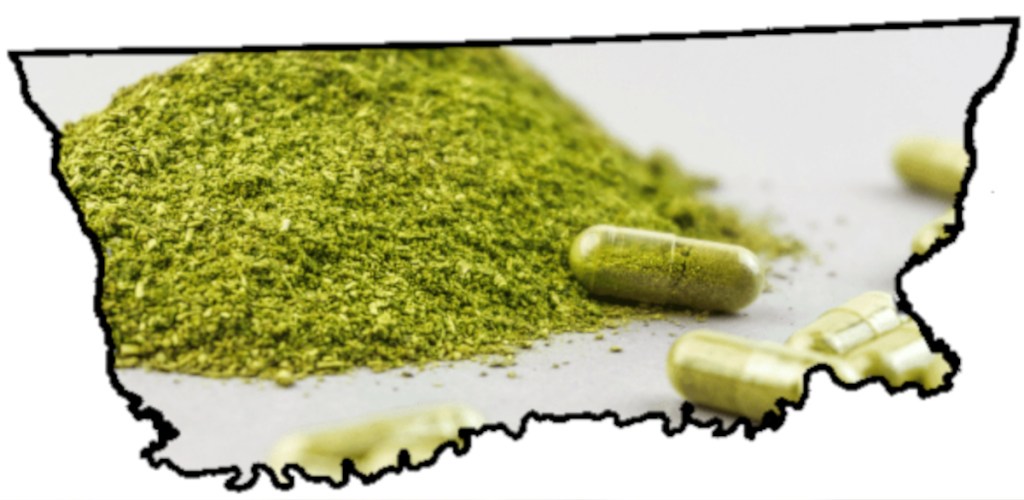
In the United States, kratom is sold in numerous forms, including teas, powders, capsules, tablets, gummies, liquid extracts, concentrated shots and flavored beverages.
The plant contains psychoactive compounds known as alkaloids. Two of the best known are mitragynine and 7-hydroxymitragynine, often abbreviated as 7-OH.
These compounds interact with opioid receptors in the brain, producing effects that can resemble those of both stimulants and opioids.
People who use kratom may experience increased energy, alertness, relaxation, pain relief or euphoria, depending on the product and amount consumed.
Some individuals use kratom in attempts to manage chronic pain, anxiety or withdrawal from other opioids. However, the U.S. Food and Drug Administration has not approved kratom for treating any medical condition.
Although kratom is derived from a plant, its natural origin does not make it free of health risks.
Regular use can lead to tolerance and physical dependence. Individuals who become dependent may experience withdrawal symptoms when they stop.
Reported symptoms include nausea, vomiting, diarrhea, sweating, muscle aches, restlessness, anxiety and difficulty sleeping.
Other reported adverse effects associated with kratom exposure include seizures, liver injury, dangerously elevated blood pressure and, in some cases, fatal overdoses. Deaths involving kratom frequently involve other drugs or substances, and fatal overdoses attributed to kratom alone appear to be rare.
Researchers continue to study kratom’s effects, and the risks associated with traditional leaf preparations can differ substantially from those of concentrated or chemically enhanced products.
Particular concern surrounds concentrated 7-OH products and newer synthetic kratom-related compounds, which may have considerably stronger opioid-like effects than traditional kratom leaf.
The FDA has warned consumers about concentrated 7-OH products marketed as tablets, gummies, drink mixes and shots, citing concerns about addiction, overdose and other serious health complications.
Kava, which Kawasaki said was mixed into some of her drinks, is a separate plant traditionally used in the South Pacific. It can produce relaxation and a temporary numbing sensation in the mouth and tongue. Its risks include sedation and, in rare cases, serious liver injury.
Tribal Council Receives Testimony
Kawasaki took her concerns directly to the Fort Peck Tribal Executive Board in late August, submitting written testimony urging tribal leaders to consider restricting kratom sales.
She provided her testimony to Tribal Sergeant-at-Arms Bruce “Cubby” Damon, who presented it to council members on her behalf.
Damon subsequently confirmed to the Fort Peck Journal that he presented Kawasaki’s letter to the council.
According to Damon, the matter received a brief discussion, but no formal action was taken during that discussion.
Kawasaki’s testimony described her experience with addiction and warned that the community should address the availability of kratom before it becomes a larger public health problem.
“I respectfully ask the Tribal Executive Board to consider banning the sale of kratom on the Fort Peck Reservation before it has the opportunity to become another battle our people have to fight,” she wrote.
Previous reporting by the Northern Plains Independent documented council members discussing the need for additional information.
Councilman Jestin Dupree said members wanted an assessment and an update from the Tribal Health Director.
Councilwoman Roxanne Gourneau reported that officials had urged the Tribal Prosecutor’s Office to work with Tribal Health to investigate kratom and present information before further action was considered.
However, the Journal has not independently established whether that review was completed or whether recommendations were subsequently presented to the board.
In an October 20 public statement, Kawasaki expressed frustration over the lack of visible progress, saying she had contacted council members repeatedly without receiving a substantive update.
She has also renewed her request for a written explanation of where the issue stands.
Blackfeet Tribes Already Enacted Ban
Fort Peck would not be the first tribal government in Montana to restrict kratom.
On September 12, 2025, the Blackfeet Tribal Business Council adopted a resolution prohibiting the sale, use and possession of kratom on the Blackfeet Reservation.
The resolution targeted businesses selling kratom products. At the time, tribal officials said additional work was needed to determine how penalties for individual possession would be enforced.
The Blackfeet action illustrates how tribal governments may adopt their own restrictions independent of broader state legislation, although the scope of enforcement depends on the wording of tribal law and applicable jurisdiction.
Kawasaki has pointed to the Blackfeet decision as an example of the type of action she wants Fort Peck leaders to consider, with one important distinction: Her proposal focuses on commercial sales rather than criminalizing individual users.
Montana Lawmakers Consider Statewide Ban
The debate over kratom is also taking place in Helena.
In August 2026, Montana’s Economic Affairs Interim Committee voted 6-5 to advance draft legislation proposing a statewide kratom ban.
The proposal, designated LC 661, would designate kratom as a controlled substance and is being prepared for consideration during the 2027 legislative session.
Montana has not enacted a statewide kratom ban.
Supporters of prohibition have raised concerns about addiction, unpredictable product strength and the costs of regulating kratom products.
Industry representatives, including members of the Montana Kava & Kratom Association, have argued that traditional kratom leaf should be distinguished from concentrated and synthetic derivatives. They favor regulation and product standards over a complete prohibition.
Meanwhile, local public health authorities have already begun taking action.
In Yellowstone County, RiverStone Health began enforcing restrictions on kratom-containing foods and beverages in licensed retail food establishments in January 2026. The agency subsequently filed lawsuits against four businesses in May over continued sales.
Missoula County health officials have announced similar enforcement beginning after November 2, 2026, targeting kratom products sold by licensed retail food establishments.
These local restrictions do not amount to a statewide prohibition on possession.
North Dakota Restricts Kratom After Public Health Concerns
North Dakota took action in August after state officials raised concerns about kratom-related overdoses and deaths.
Governor Kelly Armstrong issued an emergency order temporarily prohibiting the sale, possession and use of all kratom products beginning August 5, 2026.
State health officials reported 50 deaths associated with kratom or related compounds since 2019. In 23 cases, those substances were listed as part of the primary cause of death; in one additional case, they were contributing factors. In the remaining 26 cases, the substances were detected, but no causal contribution was documented.
On September 4, Armstrong signed House Bill 1628 following a special legislative session.
The new law bans the sale, possession and use of specified synthetic kratom derivatives, including concentrated 7-OH products and certain other potent compounds.
Natural kratom, however, was not permanently outlawed in the same manner. Instead, lawmakers established regulations requiring purchasers to be at least 21 years old, along with product labeling requirements and retailer licensing.
Under the legislation, sales of all kratom products remain prohibited until the required administrative regulations are implemented.
The distinction is significant: North Dakota’s permanent legislation separates natural kratom products from synthetic and highly concentrated derivatives.
Mississippi Investigates Two University Student Deaths
Kratom-related products also became the focus of a federal investigation in Mississippi following the deaths of two University of Mississippi students on September 21, 2026.
Aidan Hamilton, 18, and Robert Strang, 20, were found dead in separate locations in Oxford.
Investigators discovered packaging for products containing kratom-related compounds during the death investigations.
Federal prosecutors subsequently charged a local store clerk and his son with possession with intent to distribute controlled substances after investigators traced suspected synthetic kratom-related products to a retail business.
According to court documents reported by SuperTalk Mississippi, toxicology testing detected mitragynine and the synthetic compounds MGM-15 and mitragynine pseudoindoxyl, or MGPI, in both students.
However, the presence of those compounds does not by itself establish that they caused the deaths. The official determination of their role in the fatalities remained under investigation.
The case involved synthetic kratom-related products rather than simply traditional kratom tea or leaf.
Mississippi has not enacted a complete statewide ban on natural kratom.
Under legislation signed in April 2025, Mississippi prohibits sales to people younger than 21, restricts certain product formulations and requires registration and labeling for businesses selling kratom. The law also allows municipalities and counties to adopt stricter local bans.
Following the university deaths, Mississippi officials renewed calls for broader restrictions.
Kratom Restricted in Other Countries
Kratom has also attracted regulatory attention outside the United States.
Several countries have prohibited or tightly controlled the substance.
In Singapore, kratom and its principal psychoactive compounds are controlled under the Misuse of Drugs Act. Authorities prohibit unauthorized possession, trafficking and importation.
Australia classifies Mitragyna speciosa as a Schedule 9 prohibited substance. Its importation is also tightly restricted and requires government authorization for permitted purposes.
Denmark lists kratom among controlled intoxicating substances, restricting its sale and private possession except as specifically authorized by law.
International regulations differ considerably, with some countries imposing criminal prohibitions and others establishing special restrictions on manufacturing, importing, distribution or possession.
Petition Seeks Sales Ban, Not Criminal Penalties for Users
Kawasaki has now taken her campaign beyond testimony and public statements.
On October 16, she launched an online Change.org petition titled “Ban the sale of Kratom on Fort Peck Reservation.”
The petition calls on the Tribal Executive Board to enact legislation prohibiting commercial sales of kratom and kratom-derived products throughout the reservation.
Importantly, Kawasaki is not asking the Tribes to criminalize people who already possess or use kratom.
Her proposed restriction would instead focus on businesses and commercial distribution.
A sales prohibition would not automatically create a possession offense. Any future tribal ordinance would have to specify the prohibited activities, enforcement authority and applicable penalties.
No such Fort Peck kratom sales ordinance has been confirmed as enacted.
For Kawasaki, the issue remains deeply personal.
After describing the physical suffering, emotional difficulties and long recovery she experienced, she said her goal is to prevent others from encountering the same situation without understanding the potential risks.
“I cannot change my experience with kratom, but I can speak about it,” she wrote in her testimony. “If sharing my story helps someone else understand the risks a little sooner than I did, then I am thankful I have the opportunity to share it.”
Kawasaki is encouraging tribal members, families and other supporters to sign her petition while she continues seeking a response from the Tribal Executive Board.
The petition is available online at:
View Danelle Kawasaki’s petition to ban commercial kratom sales on Fort Peck.



Leave a Reply