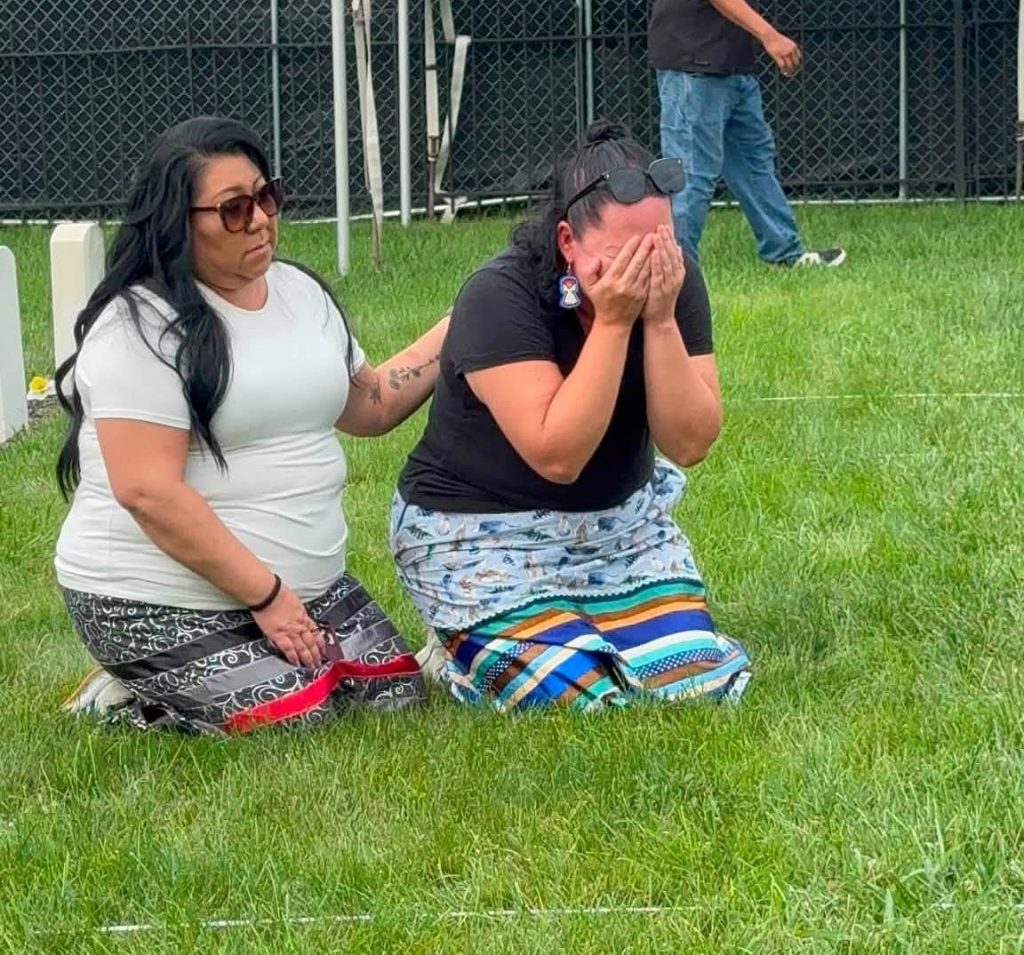
CARLISLE, Pa. — When Michael Redstone finally stood before Christine Redstone’s grave at the Carlisle Indian Cemetery this week, generations of separation suddenly became something she could see and touch.
She fell apart.
Redstone told The Journal from Carlisle. “I seen Christine’s grave and fell apart. It was heavy and emotional to actually see the Graves. But I’m happy too because I feel like they know we are here for them and they’re finally getting to come home.”
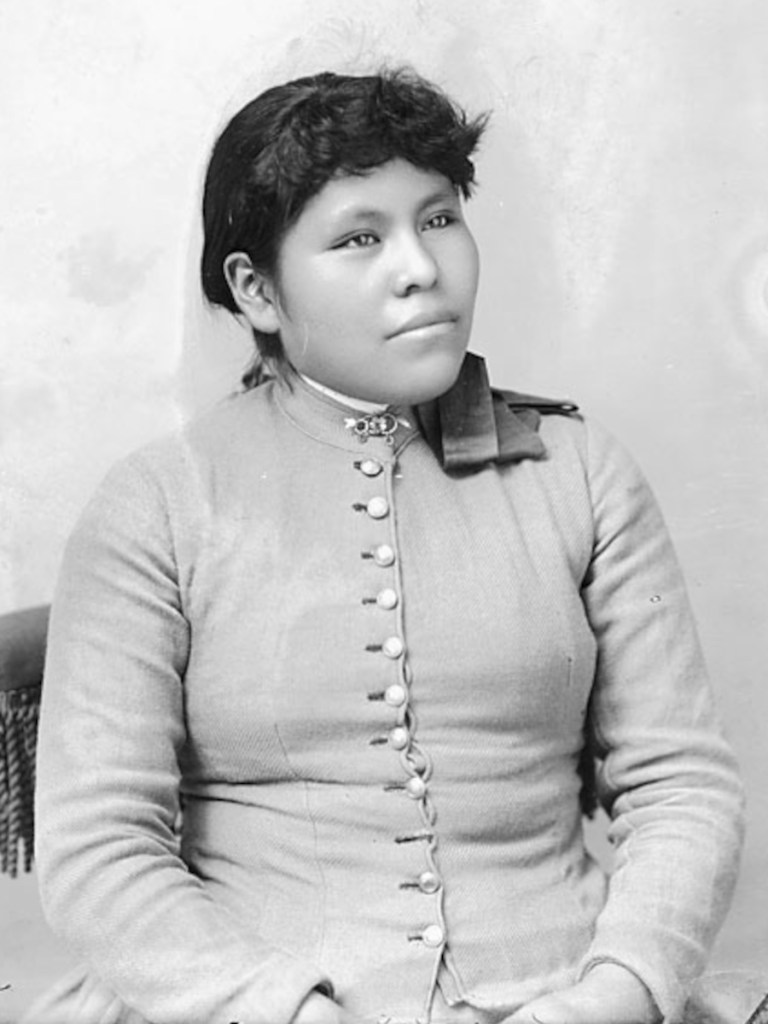
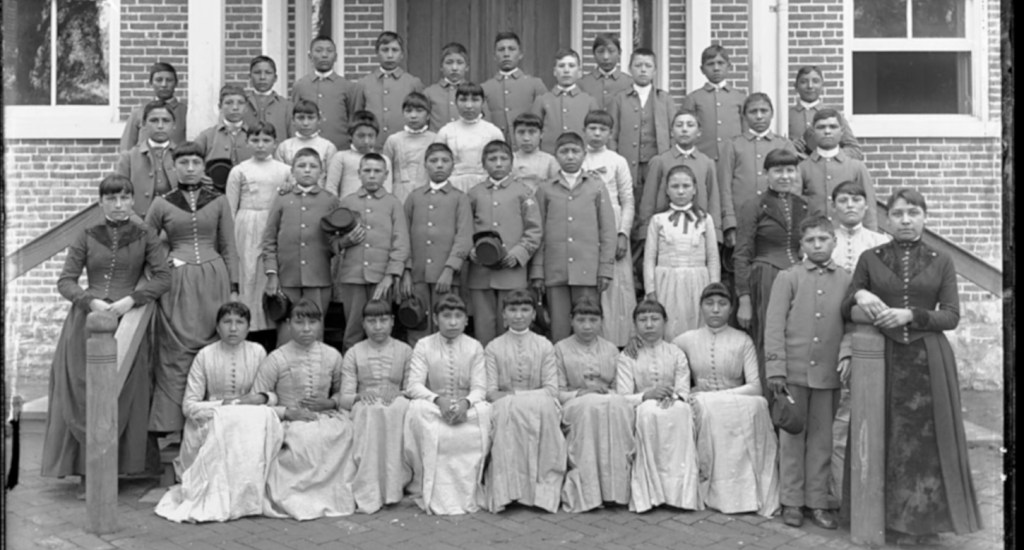
Redstone traveled to Pennsylvania as part of the Fort Peck delegation preparing to bring home Christine Redstone, Peter Howe and Richard Morgan, three Fort Peck Indian Reservation children who died after being sent more than a thousand miles from their homeland to the Carlisle Indian Industrial School over 100 years ago.
For Redstone, Christine is not simply a name in the history of the federal Indian boarding school system.
She is family.
Asked what went through her mind as she stood at Christine’s grave, Redstone said she thought about those who survived and the family that remained.
“Oh gosh. I thought finally we are here for her,” Redstone said. “She knows we haven’t forgotten her and that we her family are here today, resilient and alive despite all the things that was done to us in the name of assimilation.”
The Fort Peck delegation is now at Carlisle as years of work to return the children reaches its final stages.
For Redstone, bringing Christine home connects generations of her family.
“To me personally it means I get to be apart of something bigger than myself,” she said. “I feel like for my family it connects us to our past and present. To other people its just history to us it’s real. Christine was and is a precious member of our family. And our family has always loved having our children close to us.”
‘They are all precious and loved’
The return of the children also carries a message for another generation, Redstone said.
Asked what she wanted young people at Fort Peck to understand about Christine and the significance of bringing the children home, she brought the subject back to the value Native families have always placed upon their children.
“I want the young people of Fort Peck to understand that bringing Christine home is important because it shows just how precious our children have always been to us,” Redstone said. “I want them to know that they are all precious and loved and they matter.”
For Redstone, Christine’s return is also an answer to the assimilation policies that separated generations of Native children from their families and communities.
“Bringing Christine home says to me that our family is strong,” she said. “That despite everything, we managed to survive and keep going forward.”
Years of work to bring them home
The homecoming taking place this week is the culmination of years of work by the Fort Peck Tribes’ Historic Preservation Office —and, according to THPO Director Dyan Youpee, work that began long before her own involvement.
Asked by The Journal how long she had personally worked toward bringing the Fort Peck children home from Carlisle, Youpee said seven years, beginning when she became director of the Cultural Preservation Department.
She also credited those who came before her.
Youpee said the late Ken Ryan and her father the late Curley Youpee, the first Cultural Resources director, had worked on the issue for years.
According to Youpee, Christine Redstone was the first of the three children located at Carlisle. She recalled that Ryan had traveled to Carlisle with another person sometime around the 1980s or 1990s, although she said she was unsure of the exact date.
Peter Howe and Richard Morgan were discovered later, during the 2010s, Youpee said.
Because the precise dates of those discoveries remain to be verified, The Journal is continuing to gather records documenting the earlier work.
What is clear is that this week’s homecoming represents work spanning generations.
Three Fort Peck children
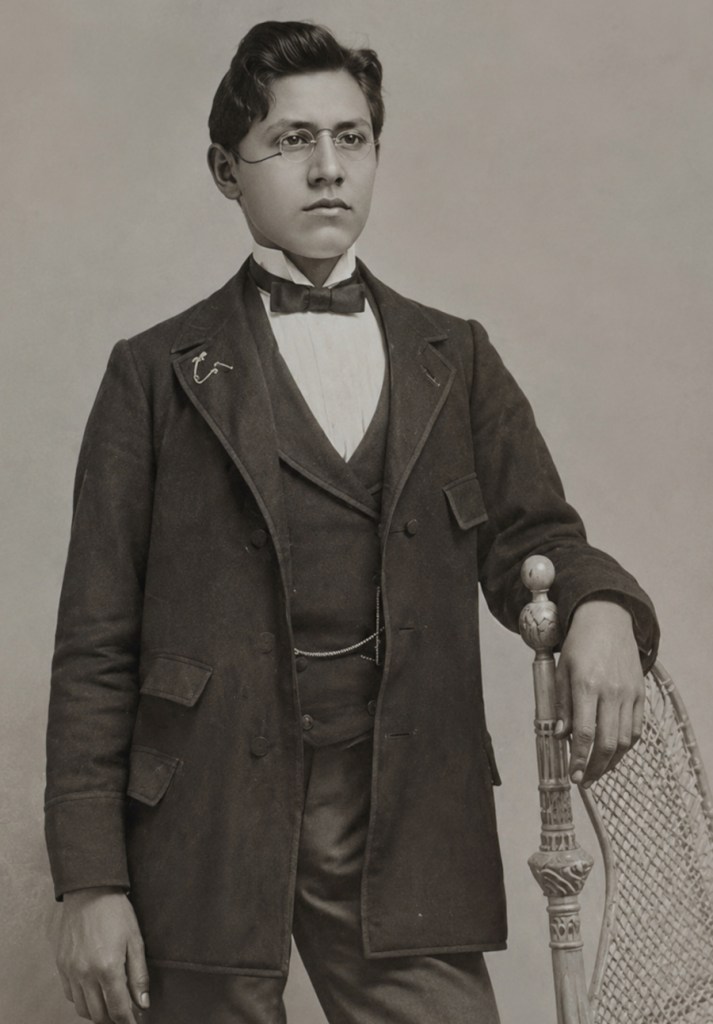
The Fort Peck children being repatriated are Christine Redstone, Peter Howe and Richard Morgan.
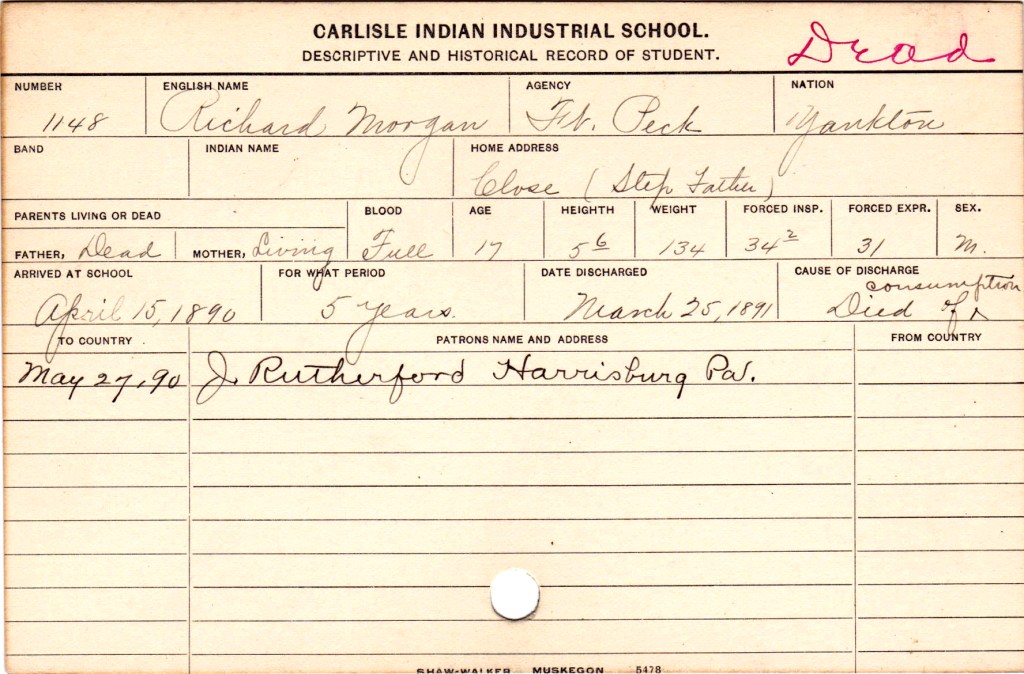
Fort Peck awareness materials produced ahead of the repatriation placed their names and surviving images prominently before the community. One of those materials includes a surviving Carlisle student record for Morgan identifying him with the Fort Peck Agency and as Yankton.
Morgan arrived at Carlisle on April 15, 1890. He died less than a year later, on March 25, 1891, with consumption—an historical term commonly associated with tuberculosis—recorded as the cause of death. Surviving Carlisle records document his death and burial.
The three children remained buried at Carlisle while generations were born, lived and died back home at Fort Peck.
Now their people have come for them.
At Carlisle
The delegation traveled from Fort Peck to Pennsylvania ahead of this week’s disinterments.
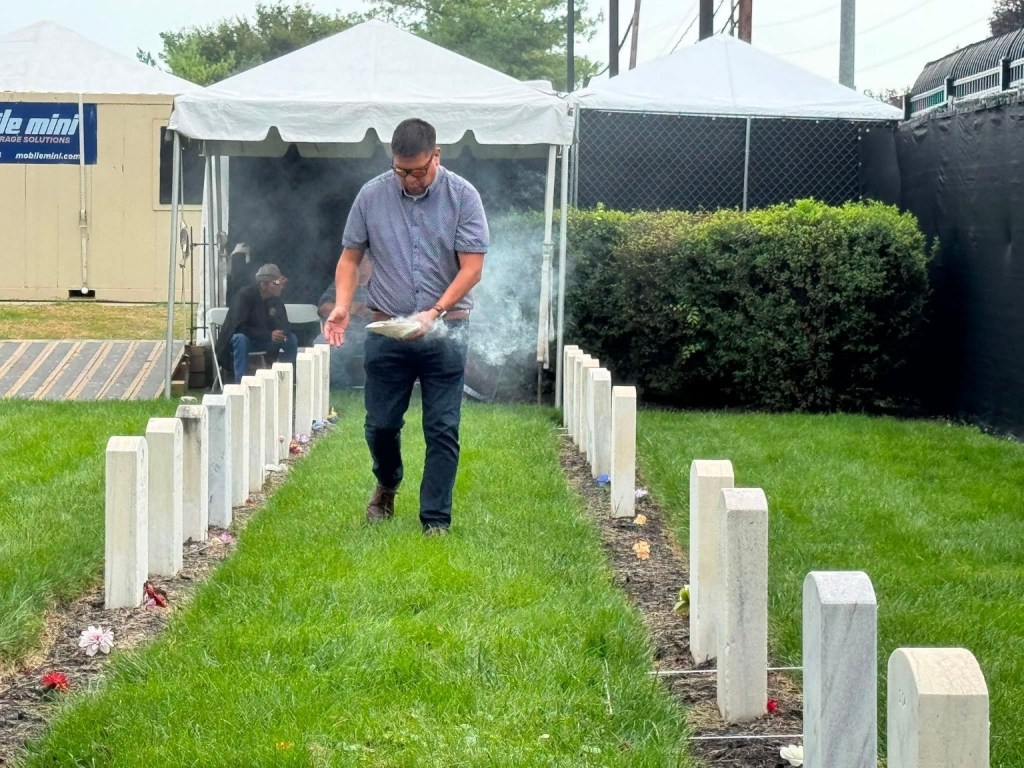
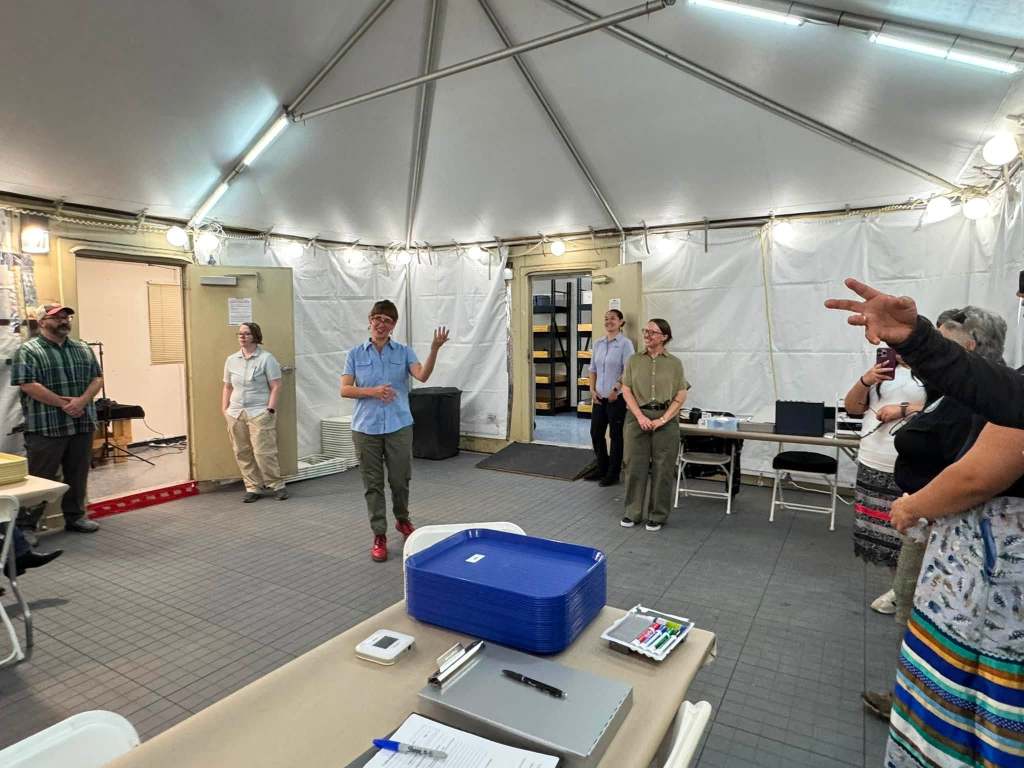
On Tuesday morning, photographs shared from Carlisle showed delegation members meeting with grounds staff, walking among the rows of cemetery markers and preparing for the work ahead.
Councilman Melvin Scott was photographed smudging the cemetery before the disinterment process.
Another photograph captured Redstone kneeling at Christine’s grave, overcome with emotion, as Shaye Frank knelt beside her and offered comfort.
Then the photographs stopped.
The delegation announced that phones were no longer permitted in the cemetery as they entered the portion of the process involving the actual disinterments.
That restriction is also specifically included in the repatriation schedule: no media are allowed during the disinterment.
Tuesday, Sept. 1, is scheduled for the disinterments of Peter Howe and Richard Morgan. Following a morning introductory meeting and site visit, their disinterments were scheduled from 8 a.m. to noon and again from 1 to 5 p.m.
Christine Redstone’s disinterment is scheduled for Wednesday, Sept. 2, following the same general schedule.
The private nature of that work means some of the most significant moments of the children’s return will not be photographed or shared publicly.
Two flags from home
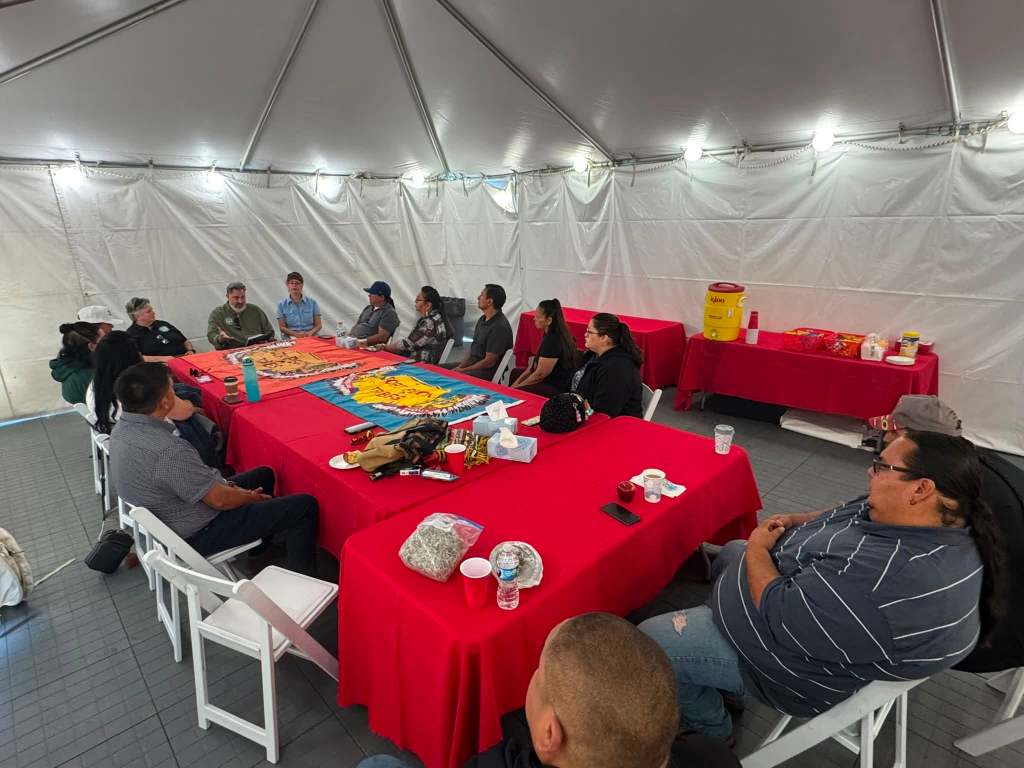
One photograph from the delegation’s orientation at Carlisle shows two Fort Peck Tribal flags brought from home.
One is the familiar blue Fort Peck Tribal flag.
Beside it is an orange Fort Peck Tribal flag.
The orange flag grew out of the Orange Flag Project, an awareness effort in the weeks preceding the repatriation in which images of the Fort Peck Tribal flag were changed from blue to orange as a visual reminder of Christine Redstone, Peter Howe and Richard Morgan and their coming home.
By the time the delegation reached Carlisle, the symbol had become physical: an orange Fort Peck flag traveled east with them and was placed alongside the traditional Tribal flag.
The delegation described the flags simply as “representing HOME.”
The long road back to Fort Peck
Once the work at Carlisle is complete, another journey begins.
A transfer ceremony is scheduled for 8 a.m. Sunday, Sept. 6, at Carlisle. The Fort Peck delegation is scheduled to depart at approximately 9 a.m. with the children and begin traveling west.
Their first leg will take them from Carlisle to Orland Park, Illinois, an approximately 10-hour trip. The children are scheduled to stay overnight at Colonial Chapel Funeral Home.
On Monday, Sept. 7, the delegation will continue approximately 10 hours from Orland Park to Fargo, North Dakota, where the children are scheduled to stay at Boulger Funeral Home.
Then, on Tuesday, Sept. 8, comes the final approximately eight-hour leg from Fargo to Wolf Point.
The itinerary calls for the caravan to reach the eastern boundary of the Fort Peck Reservation at the Big Muddy Creek bridge late that afternoon.
There, a smudging ceremony is planned.
The caravan will then accompany the children onto the reservation and toward Wolf Point, where custody is scheduled to be transferred at Clayton Stevenson Memorial Chapel.
The journey from Carlisle to Fort Peck will cover roughly 1,600 miles by road, depending upon the route traveled.
But the distance separating these children from home has lasted far longer than any highway journey.
‘I hope she has a good journey home’
For Redstone, what waits at the other end of that journey isn’t an abstract historical reckoning.
It is family.
At the end of her interview with The Journal, Redstone was asked one final question:
If she could say something directly to Christine today, what would she tell her?
“I would tell her that I am sorry it took us so long, but we are all here and that more family and community members are at at home waiting to feed her good food and sing her some songs,” Redstone said.
“And lastly I would just tell her I love her and I hope she has a good journey home. ”


Leave a Reply