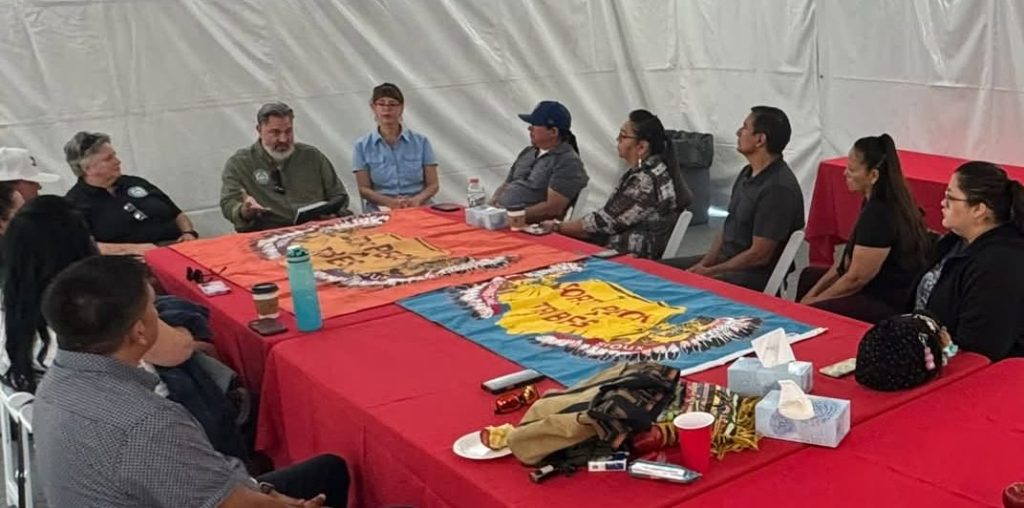
It started with a phone, a photograph and a simple change of color.
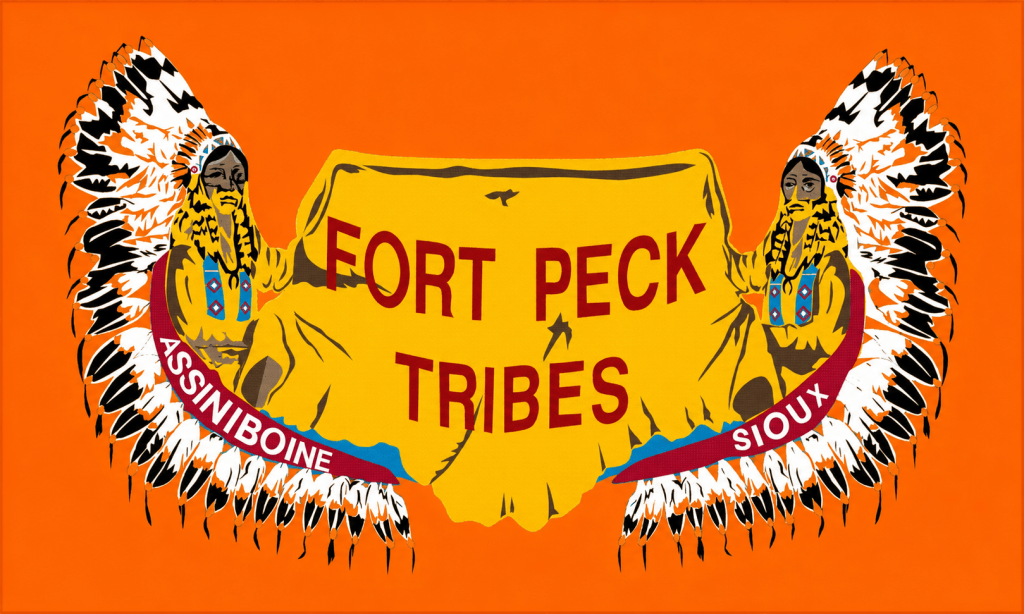
For years as a reporter and photographer at Fort Peck, I had accumulated photographs of the Fort Peck Tribal flag. It was everywhere.
It was carried into powwows. It hung on the walls during meetings. Tribal members carried it while traveling. Soldiers from Fort Peck posed with it overseas. Sometimes people sent photographs back home showing the flag in places far from the reservation. Other photographs came from years of news coverage, community events and ordinary life around Fort Peck.
I love the Fort Peck Tribal flag exactly as it is. Its blue background is immediately recognizable here. I would never want to permanently change it.
But that solid blue background also made it possible to do something visually striking.
Change the blue to orange.
The idea came as Fort Peck prepared for the repatriation of three children who died while attending the Carlisle Indian Industrial School in Pennsylvania: Christine Redstone, Peter Howe and Richard Morgan.
Orange has become an international symbol of remembrance for Indigenous children who were taken to boarding and residential schools. Orange Shirt Day grew from the story of Phyllis Webstad, whose new orange shirt was taken from her when she arrived at a residential school as a child. The words Every Child Matters and the color orange have since become closely associated with remembering the children who never returned home.
Three of those children were coming home to Fort Peck.
So I wondered: What would happen if the Fort Peck Tribal flag was orange?
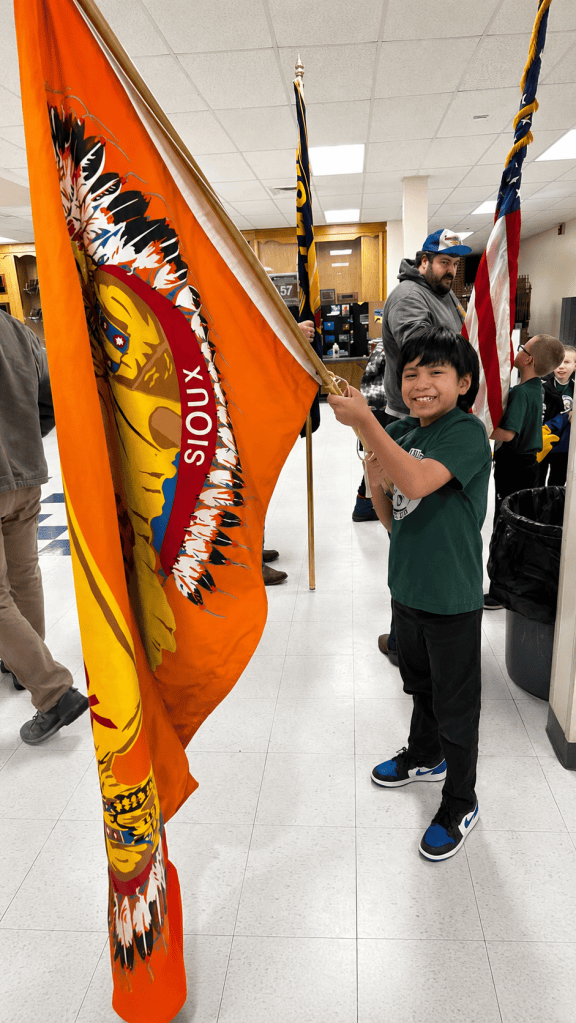
It was bright. It was unmistakably ours. And, most importantly, it was different enough to make somebody stop scrolling and wonder why.
That became the Orange Flag Project.
Keeping the children in people’s minds
The idea was never to replace the Fort Peck flag or suggest that its traditional colors should be changed.
The orange flag had one purpose: awareness.
I began taking photographs of the Fort Peck Tribal flag and digitally changing only the blue portions to orange. Then I began posting them regularly on social media as Fort Peck moved closer to the repatriation.
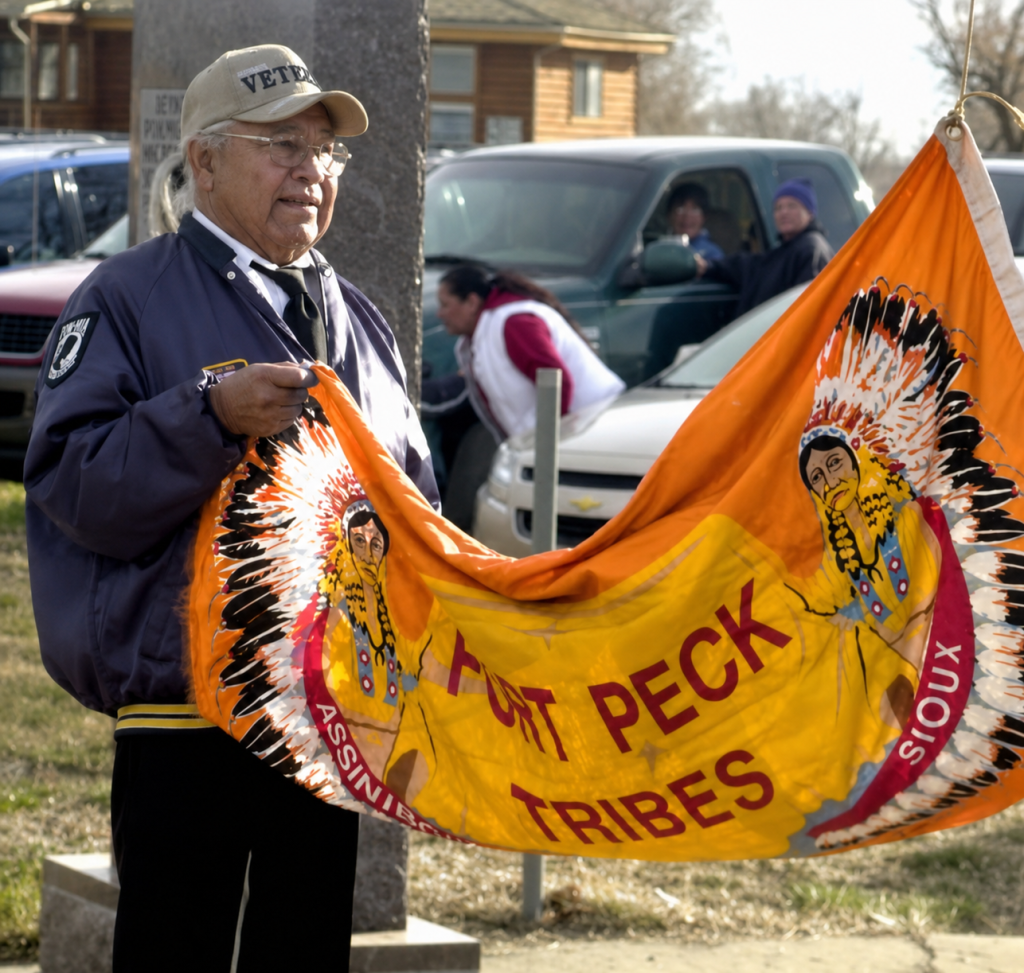
The repetition was intentional.
Social media moves quickly. A story can receive attention one day and disappear beneath hundreds of other posts the next. I wanted people to continue seeing orange flags and remembering why they were there.
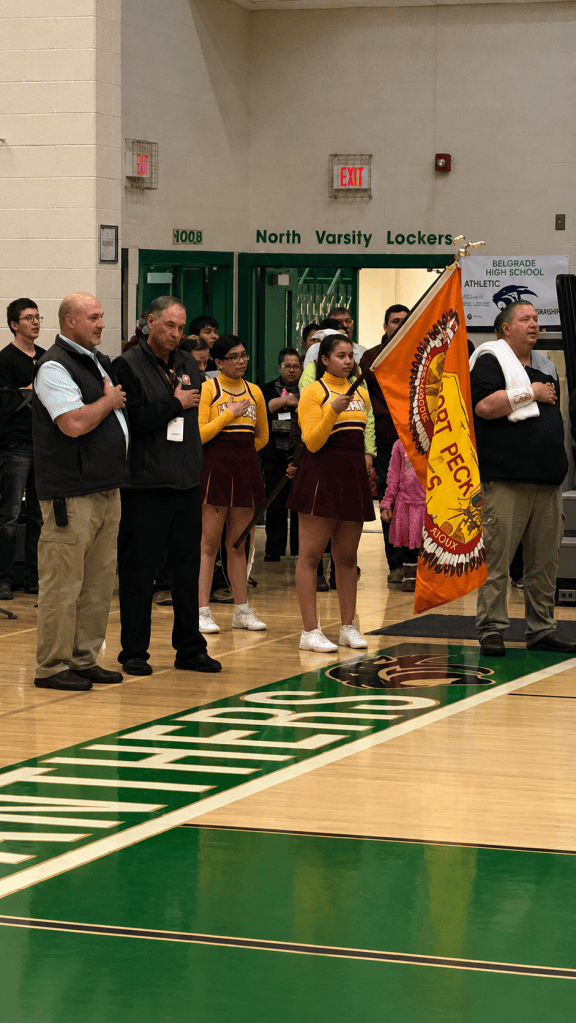
Christine Redstone.
Peter Howe.
Richard Morgan.
They were coming home.
I had an advantage because of the years I had spent photographing Fort Peck. I already had many different images of the tribal flag in my archives.
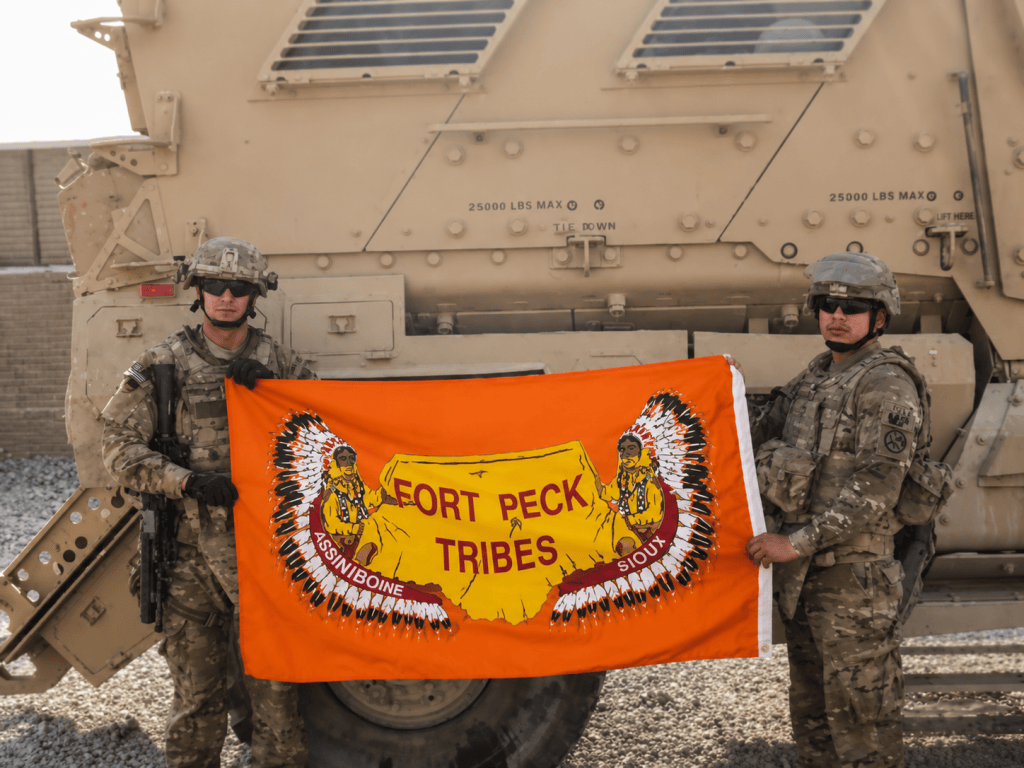
When I needed more, I put out a call asking people to send photographs containing the Fort Peck flag.
People responded.
There were soldiers with the flag. Children camping with it. Flags at powwows and community gatherings. The tribal flag displayed in government buildings. Photographs from years earlier suddenly became useful again for an entirely different purpose.
I also searched through older news photographs and images of the Fort Peck flag that had appeared outside the reservation.
Some Orange Flag Project posts traveled considerably farther than others. A photograph featuring Hunter Azure, for example, was widely shared and reposted.

An older meme I had made was brought back for the project as well. After climbers reached the top of the Empire State Building and unfurled a banner high above New York City, the photograph became an internet phenomenon and people began creating their own versions. I had made one placing the Fort Peck Tribal flag over New York.
For the Orange Flag Project, that old meme returned.
This time, the Fort Peck flag over New York was orange.
The project began developing into something I had not originally planned: a collection of Fort Peck history and everyday life, all connected by one temporary color.
An orange flag for Rusty
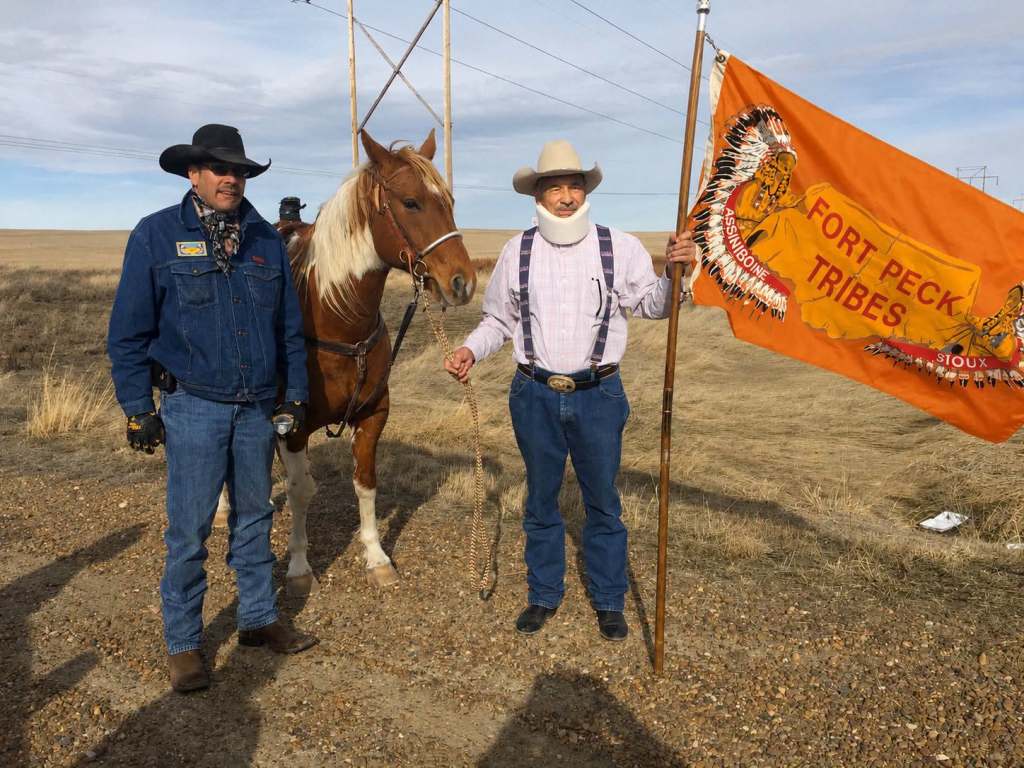
The project also began intersecting with events happening at Fort Peck during the weeks leading to the repatriation.
When former Fort Peck Tribal Chairman A.T. “Rusty” Stafne died, my boss, Kristopher Boyd, sent me an older photograph of Stafne and his son Grant. They were standing outdoors on the west end of the reservation beside a Fort Peck Tribal flag.
It was a beautiful photograph for remembering a former chairman.
For the Orange Flag Project, I changed the flag to orange.
Not everyone agreed with that decision.
Some people felt that a memorial photograph of Stafne should show the Fort Peck flag in its traditional blue and that altering it was inappropriate.
I understood their point.
But Stafne’s daughter responded that she supported it and believed it was something her father would have approved of. She had been following the Orange Flag Project and understood what the orange represented and why the project was being done.
That disagreement was also a reminder that the Fort Peck flag means something deeply personal to people.
The Orange Flag Project was never asking people to stop loving the blue flag.
It depended upon people loving it.
The orange version attracted attention precisely because everyone already knew what color the Fort Peck flag was supposed to be.
Later that morning, I went to the Medicine Bear Complex and found another image.
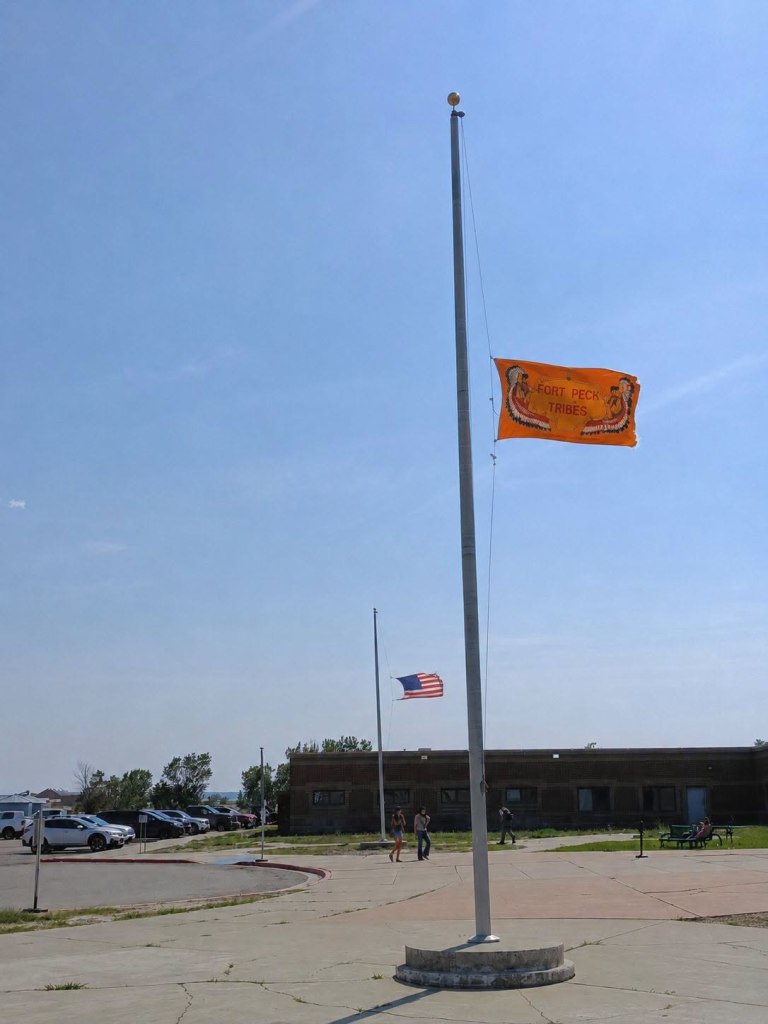
The Fort Peck Tribal flag had been lowered following Stafne’s death. Nearby, the United States flag was also lowered following the death of Dolly Parton and a presidential order directing U.S. flags to half-staff.
Two flags were lowered for two very different people — one a former leader of the Fort Peck Tribes and the other an internationally known American entertainer.
For a few days, national events, Fort Peck history and the Orange Flag Project all seemed to intersect.
Then people started asking if the flag was real
Something unexpected began happening as more orange flags appeared online.
People wanted one.
I started getting questions about whether the orange Fort Peck flag actually existed and where somebody could get one.
The answer, initially, was that the flags people were seeing were digital. They were ordinary photographs of blue Fort Peck flags that had been altered for the project.
Then, shortly before the Fort Peck delegation left for Carlisle, someone brought something to the Tribal Historic Preservation Office.
A real orange Fort Peck Tribal flag.
After weeks of creating orange flags on a phone screen, it was strange to see one that had not been digitally altered.
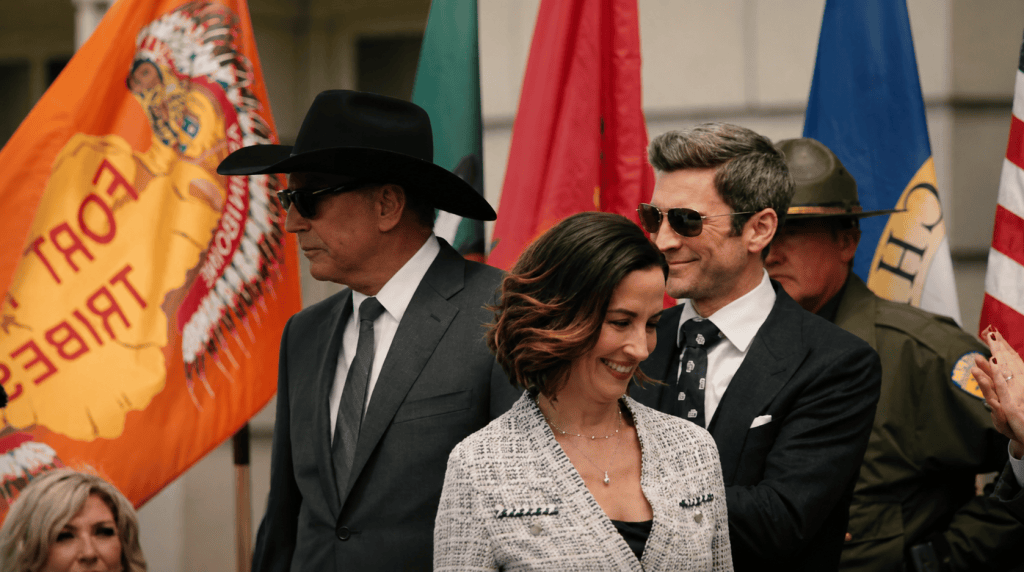
It was actually orange.
And it wasn’t a little flag.
It was big.
The flag went with the Fort Peck delegation to Carlisle.
Then photographs began coming back from Pennsylvania.
There, beside the graves of Fort Peck children who had been buried more than a century ago and more than a thousand miles from home, stood two Fort Peck Tribal flags.
One was blue.
The other was orange.
The Orange Flag Project had begun as an image on a phone at Fort Peck.
Now the flag was standing at Carlisle.
The project belongs to anyone who wants to remember
There are no boxes of professionally printed Orange Flag Project flags sitting somewhere waiting to be distributed.
There don’t need to be.
Anyone wishing to participate can print an orange Fort Peck flag on paper and display it temporarily. Families can put one in a window. People can display one inside a vehicle. Teachers and students who attend repatriation events can make small paper versions to carry, if they choose.
The point was never merchandise.
The point was visibility.
As the children make the final portion of their journey home and Fort Peck gathers for their return, an orange flag along the route can carry the same message as the first digitally altered photograph did weeks ago:
Remember why this is happening.
The Orange Flag Project will come to an end with the repatriation.
What happens to the large physical orange flag afterward remains to be seen. Perhaps it will be preserved. Perhaps it will appear again for boarding-school remembrance. Perhaps its journey from Fort Peck to Carlisle and home again will become part of the history attached to it.
Whatever happens to that particular flag, the project has already accomplished something I never anticipated when I changed blue pixels to orange on my phone.
For weeks, photographs from different years and different pieces of Fort Peck life have been brought together for one purpose. Powwows, veterans, children, community members, elected leaders, memorials and ordinary moments all became part of a visual countdown toward the return of three children who had been gone for generations.
The Orange Flag Project was never about changing the Fort Peck Tribal flag.
It was about changing it just long enough to make people look at it again.
And ask why.
Christine Redstone. Peter Howe. Richard Morgan.
They’re coming home.


Leave a Reply