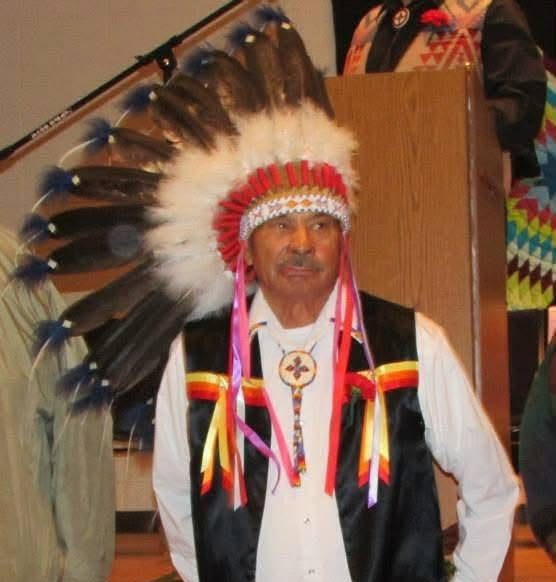
POPLAR — A.T. “Rusty” Stafne, a former chairman of the Fort Peck Assiniboine and Sioux Tribes, longtime Tribal Court judge and chief judge, Korean War veteran, rancher and one of the most recognizable Fort Peck political leaders of his generation, died peacefully in his sleep Wednesday morning, Aug. 26, at the Eastern Montana Veteran’s Home in Glendive, according to his family and information released by Clayton Stevenson Memorial Chapel.
He was 90.
Stafne, an Assiniboine elder born in June 1935, spent decades in tribal public service and lived through — and helped shape — several significant periods of Fort Peck political history.
His career included service as a Tribal Court judge, chief tribal judge, Tribal Executive Board member and multiple terms as Tribal Chairman.
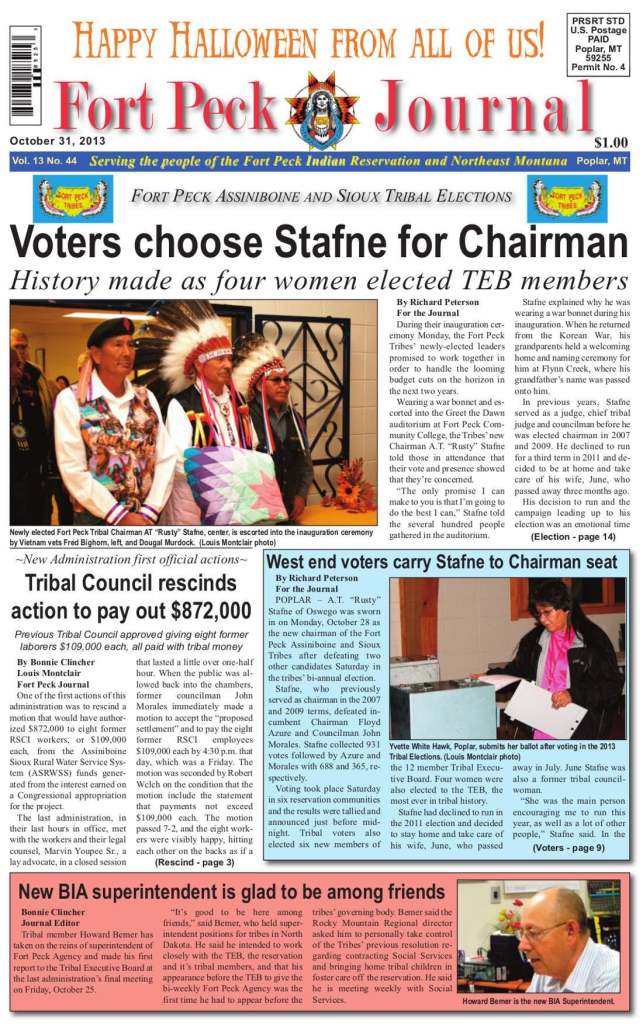
Contemporary Fort Peck Journal coverage shows that before becoming chairman, Stafne had served as a judge and chief tribal judge as well as a councilman. A 2013 Journal account noted that he had been elected chairman in both 2007 and 2009 before choosing not to seek another term in 2011.
A veteran who kept the war to himself
Stafne was a veteran of the Korean War, although those who knew him remember that he rarely spoke about his wartime experiences.
When asked about the war, he generally kept those memories private.
An account published by the Journal following his 2013 election provides a rare glimpse into what his military service meant to his family.
During his inauguration that year, Stafne entered wearing a war bonnet and was escorted by Vietnam veterans Fred Bighorn and Dougal Murdock. He explained that when he returned home from the Korean War, his grandparents held a welcome-home and naming ceremony for him at Flynn Creek, where his grandfather’s name was passed on to him.
His privacy extended to other deeply personal matters.
The late Fort Peck Journal editor Bonnie Red Elk once recalled an occasion when Stafne was asked to lead a prayer before a dinner attended by Native dignitaries.
Rather than deliver a prayer aloud, Stafne told the gathering that prayer was something personal to him. He asked everyone to observe a moment of silence and pray in their own way to God. After approximately 30 seconds, he thanked those gathered and the program continued.
A rancher, cowboy and judge
Away from the chairman’s office, Stafne was a longtime farmer and rancher whose family was well known for horses.
During his 2007 campaign for chairman, Journal coverage described Stafne as having spent decades farming and ranching and noted his extensive experience in tribal government and the judiciary.
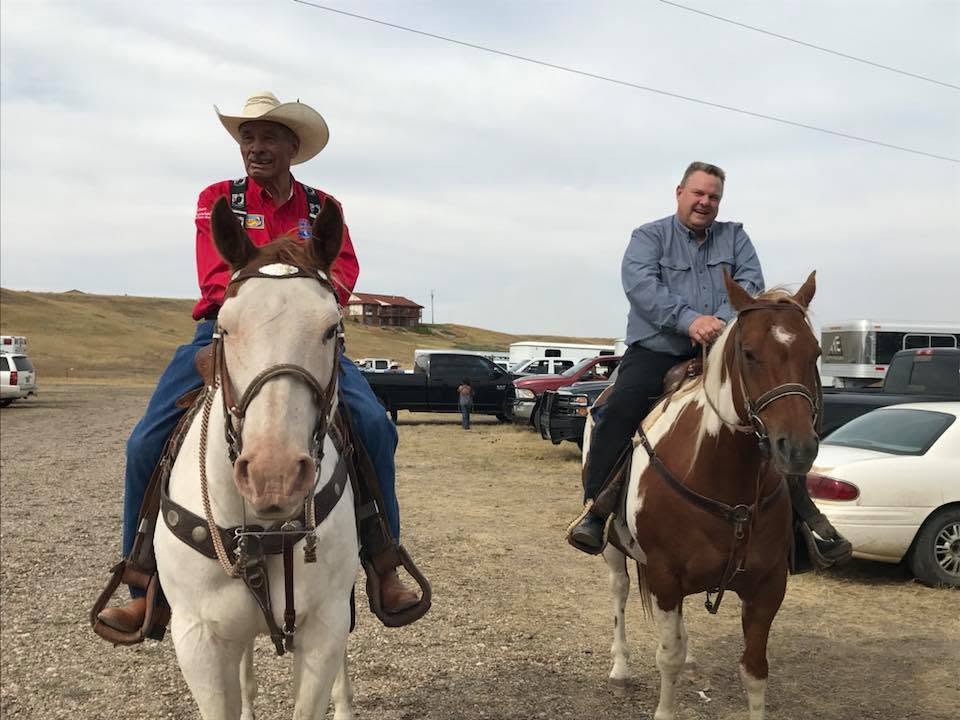
His cowboy identity remained visible throughout his public life. Photographs from over the years frequently show Stafne in a cowboy hat, around horses or participating in community events with members of his family.
His son, Grant Stafne, would also enter public service, serving in tribal government and later working in land-related programs, including the federal Land Buy-Back effort. Grant preceded his father in death.
A return to politics in 2007
Stafne’s rise to the chairman’s office came during a deeply contentious period in Fort Peck politics.
In 2007, a coalition of candidates organized under the name People for Responsible Leadership in Support of the Constitution.
The group emerged amid dissatisfaction with tribal government and concerns over administration, personnel practices, the Constitution and Bylaws, accountability and political interference in tribal programs.
Stafne had previously stepped away from the Tribal Executive Board while dealing with cancer. Contemporary Journal coverage from August 2007 documented his return to politics and his decision to seek the chairmanship.
The campaign ultimately developed into a reservation-wide political movement, with candidates holding rallies across Fort Peck and campaigning together as a slate.
Stafne’s platform emphasized restoring confidence in tribal government, adherence to the Constitution, administrative integrity, law and order, economic development, education, youth programs, elders and veterans.
He won.
Following the election, Stafne took office as chairman and his new administration immediately began dealing with inherited personnel, administrative and financial issues.
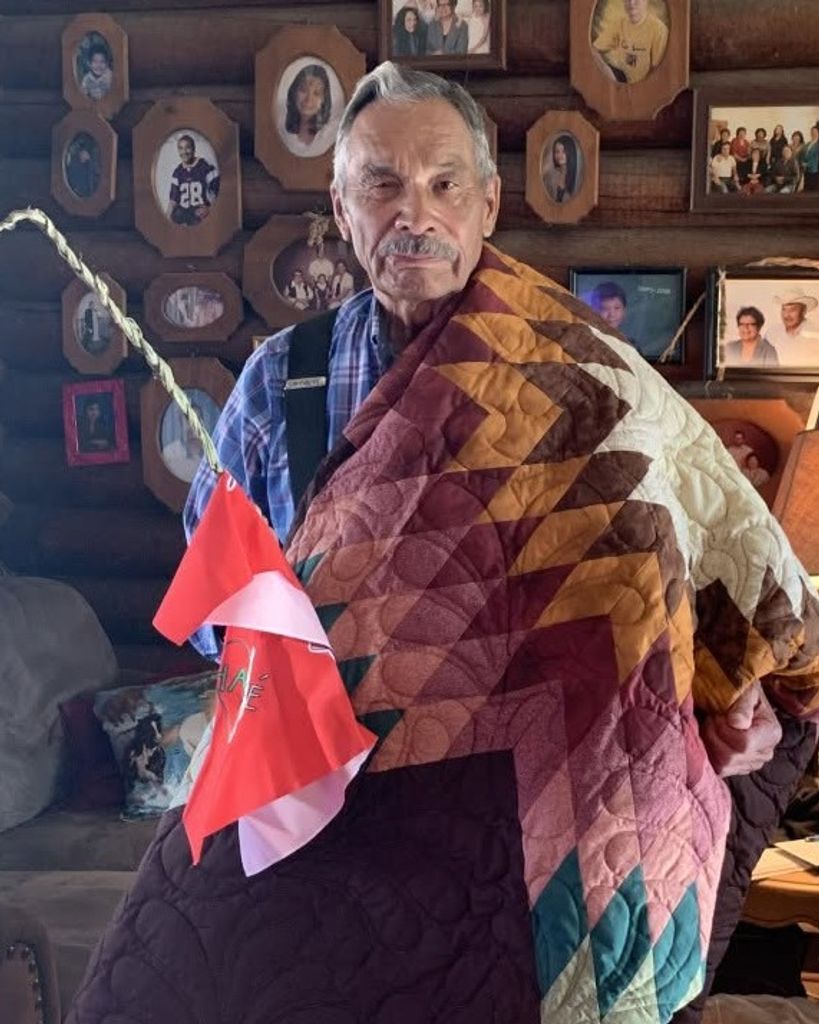
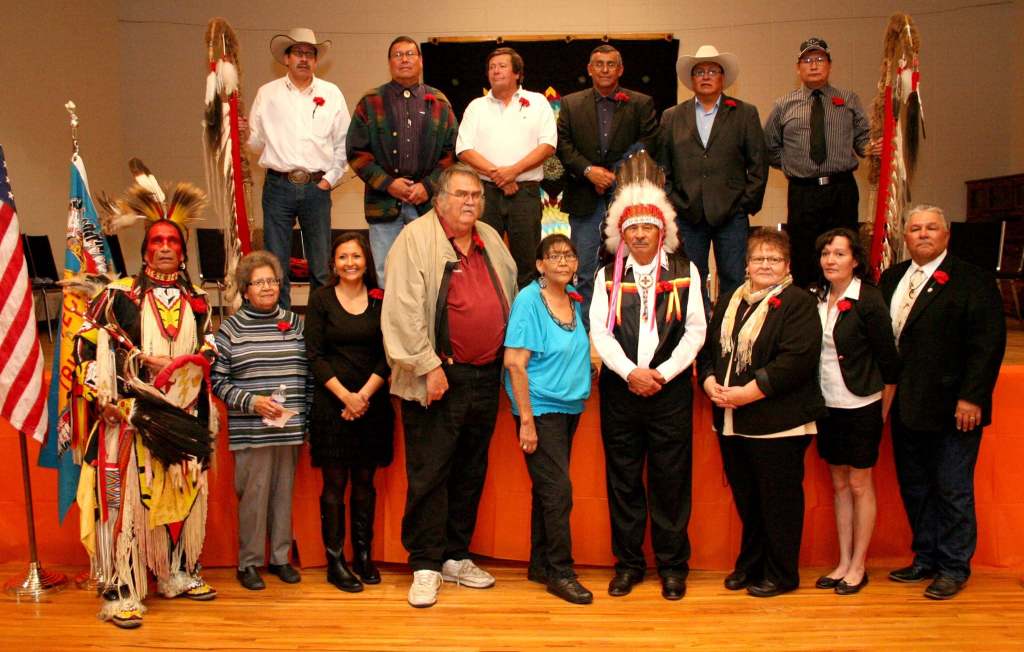
A December 2007 community honoring at the Poplar Cultural Center celebrated the newly elected Tribal Executive Board. Stafne’s sister, Joy Martin, honored him with a star quilt following his victory.
Water and infrastructure
One of the largest projects moving through tribal government during Stafne’s chairmanship was the regional rural water system.
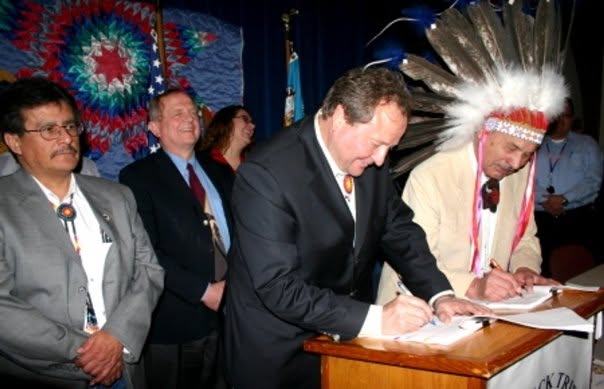
Journal coverage from November 2007 documented Stafne signing long-delayed payments connected with engineering work on the Fort Peck MR&I water pipeline project as the new administration began addressing issues surrounding the system.
Over the following years, Fort Peck leaders continued working with federal agencies and Montana’s congressional delegation to obtain appropriations and move the massive project forward.
By January 2010, the Journal reported a major milestone: Fort Kipp became the first community to begin receiving fresh water through the system.
A front-page photograph showed Stafne participating in the historic event alongside water officials as the new system was turned on for Fort Kipp.
The project, years in development, would eventually become one of the largest infrastructure undertakings in the history of the Fort Peck Reservation.
A Halloween reelection
Stafne sought another term in 2009.
That year’s tribal election was held on Halloween — Saturday, Oct. 31.
The race became one of the closest chairman contests in recent Fort Peck history.
Stafne received 730 votes, defeating Floyd Azure, who received 695 — a margin of only 35 votes. Wayne Two Bulls received 293 votes and former chairman John Morales received 210.
Stafne was sworn into his second consecutive term the following Monday.
The 2009 election remains especially memorable within the history of the Journal.
During the vote count, Journal reporter Louis Montclair was filling in to cover the election and had arrived still wearing his Halloween costume. After following the precinct totals and doing the arithmetic as the count progressed, Montclair realized before Stafne’s gathering had accepted it that the remaining ballots could no longer overcome Stafne’s lead.
He went to the nearby ambulance garage, where Stafne and supporters were listening to election results over the radio, and announced that Stafne had won.
According to Stafne’s wife, June, the group initially believed the announcement might have been a Halloween prank — largely because the reporter delivering the news was still in costume.
Only after checking the numbers did the room erupt in celebration.
Representing Fort Peck nationally
Almost immediately after the 2009 election, Stafne traveled to Washington, D.C., to represent the Fort Peck Tribes at the White House Tribal Nations Conference.
Journal coverage described the gathering as historic and reported that tribal leaders were given an opportunity to raise issues involving economic development, natural resources, housing, education, health and labor with the Obama administration.
At the time, Stafne told the Journal that the federal government appeared prepared to hear directly from tribal nations.
His chairmanship also placed him in meetings with members of Montana’s congressional delegation and other national political figures.
On one occasion, then-U.S. Sen. Jon Tester visited Stafne in the chairman’s office for a discussion that included the Fort Peck water project.
Stafne had also met then-U.S. Sen. Barack Obama before Obama became president. When Obama won the presidency in 2008, the Journal marked the historic election with a front page carrying the headline “Fort Peck Tribes say ‘Yes We Can’” and an image connecting Fort Peck leadership to the moment.
Stafne’s administration also received international media attention. In June 2008, an Al Jazeera news crew visited Fort Peck ahead of Montana’s presidential primary to report on Native voters and issues affecting Indian Country. Stafne and other Fort Peck leaders met with the crew during its visit.
He stepped away for June — then returned
After serving as chairman in the 2007 and 2009 terms, Stafne did not seek another term in 2011.
Journal reporting later explained why.
Stafne chose to remain home and care for his wife, June Stafne.
June died in July 2013.
When Stafne returned to politics later that year, he told the Journal that June had been one of the main people encouraging him to seek the chairmanship again.
On Oct. 26, 2013, Fort Peck voters returned him to office.
Stafne received 931 votes, defeating incumbent Chairman Floyd Azure, who received 688, and Councilman John Morales, who received 365.
At his inauguration two days later, Stafne addressed several hundred people gathered at Fort Peck Community College’s Greet the Dawn auditorium.
“The only promise I can make to you is that I’m going to do the best I can,” he told the crowd, according to the Journal’s contemporary coverage.
Economic development during his later administration
Stafne remained active in economic development efforts during his later chairmanship.
In August 2014, he participated in the grand opening of Fort Peck Tech Services Inc.’s oilfield pipe-rethreading operation south of Poplar.
The project was closely associated with the vision of the late Harold Buck Elk, and Stafne used the opening ceremony to honor Buck Elk’s work and hopes for tribal economic development.
Stafne cut the ribbon at the Aug. 19 ceremony as the Tribes marked the beginning of a new industrial venture at the Fort Peck Tech facility.
A chairman who respected procedure
Those who covered Stafne’s administrations also remember the formality with which he conducted Tribal Executive Board meetings.
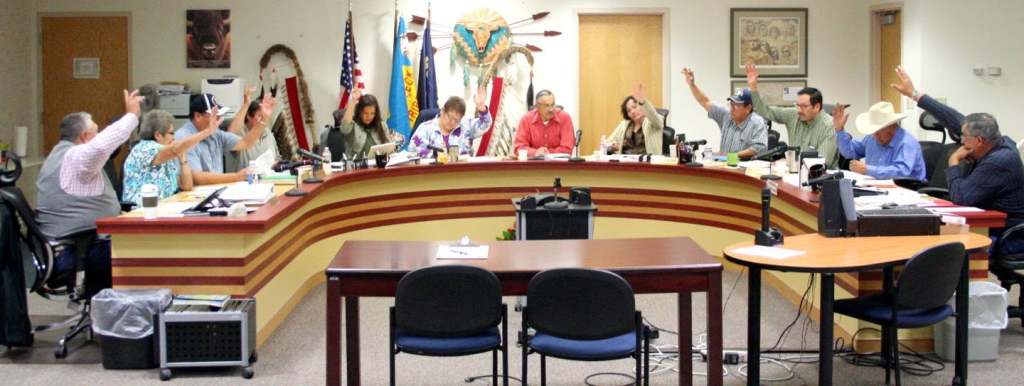
He paid close attention to parliamentary procedure and the requirements of tribal government.
During one meeting covered by the Journal, seven council members were present. When one member temporarily left the room, Stafne stopped the meeting because the council no longer had a quorum.
Discussion did not resume until the member returned.
It was a small moment, but one remembered years later because it reflected Stafne’s insistence that the council follow proper procedure even during routine business.
A longtime supporter of an independent tribal press
Stafne’s relationship with the Fort Peck Journal stretched back to the newspaper’s early years.
The Journal had been created during a contentious period involving tribal politics, access to information and the independence of tribal journalism.
When Stafne and People for Responsible Leadership in Support of the Constitution organized their 2007 campaign, they regularly advertised in the Journal. Campaign cards, posters and newspaper advertisements were produced as the slate sought office.
The Journal subsequently covered Stafne through elections, council meetings, federal meetings, community events and the major projects of his administrations.
For reporters who were young when Stafne first became chairman, his death closes a long chapter in the newspaper’s own history.
One memory involved a visit by Sen. Tester to the chairman’s office. A young Journal reporter followed the senator inside, took photographs and then sat quietly taking notes while Tester and Stafne discussed the water project.
Only afterward did the reporter learn from editor Bonnie Red Elk that the meeting had apparently been intended as a private conversation.
Stafne had never asked the reporter to leave.
Surviving illness and hardship
Stafne’s life also included serious health challenges.
He battled cancer before returning to politics in 2007.
At another point during his public career, Stafne underwent a heart procedure involving placement of a stent.
During an interview afterward, he explained the procedure to a Journal reporter by describing the stent as something similar to a small tube of wire mesh that expanded inside an artery to help keep it open.
Stafne also survived a vehicle crash later in life and continued to appear publicly afterward.
His repeated returns to public life after illness and personal hardship became part of the long arc of his career.
More than an elected official
For many at Fort Peck, however, Stafne will be remembered through much smaller moments.
Years ago, when a young Fort Peck man collapsed while walking along the highway west of Wolf Point, Stafne happened to drive past.
He stopped.
Stafne picked the man up and took him to the hospital.
The young man was Jesse Montclair, brother of Journal reporter Louis Montclair. Jesse later died.
It was an act that had nothing to do with chairmanship, elections or public office.
He simply saw someone who needed help and stopped.
That memory has remained with the Montclair family ever since.
A long Fort Peck life
Over the course of his life, A.T. “Rusty” Stafne was many things to Fort Peck.
He was an Assiniboine elder.
A Korean War veteran.
A rancher and cowboy.
A Tribal Court judge and chief judge.
A councilman.
A chairman repeatedly chosen by Fort Peck voters.
A husband and father.
And a public figure whose service stretched across decades of tribal political history.
The Journal’s archives preserve Stafne campaigning, governing, taking the oath of office, working on the reservation’s water system, meeting national leaders, attending community ceremonies and representing Fort Peck far beyond the reservation.
But the archives also preserve something harder to measure in election totals or resolutions: a man who repeatedly returned to public service, who kept some of the deepest parts of his life private, and whose presence became familiar to generations of Fort Peck people.
Four-day feed announced
In keeping with Assiniboine tradition, a four-day feed for A.T. Stafne will be held at 1 p.m. Saturday, Aug. 29, at the Wolf Point Community Hall, 6th Avenue South in Wolf Point, according to Clayton Stevenson Memorial Chapel.
Additional services will be announced at a later date as the family and Clayton Stevenson Memorial Chapel complete arrangements.


 Fort Peck Journal ONLINE
Leave a Reply