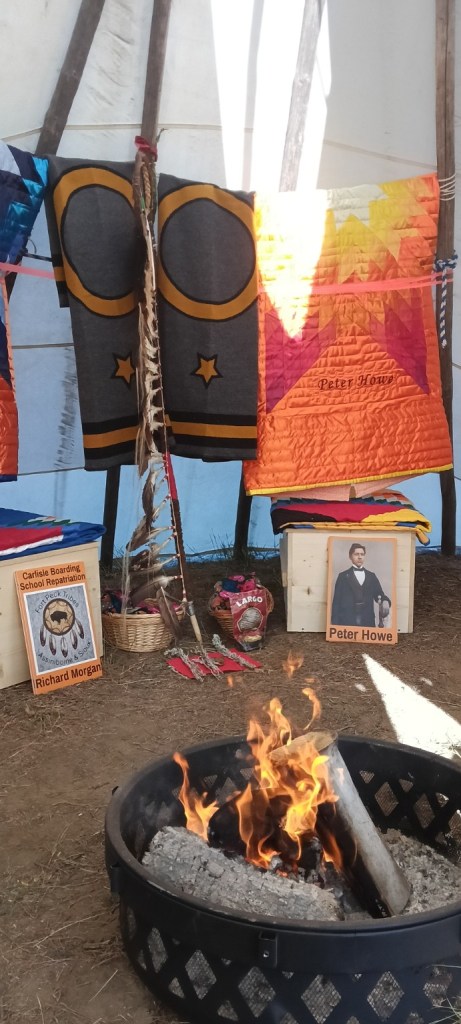
POPLAR — By the time Peter Howe and Richard Morgan arrived Tuesday night, there was already a fire burning for them inside the tipi.
I know because I helped build it.
When I arrived at the repatriation cemetery north of Poplar Tuesday evening, preparations were still underway for the return of the two Fort Peck boys from the Carlisle Indian Industrial School in Pennsylvania.
I was put to work almost immediately.
There was firewood to haul into the tipi. My friend Lance Fourstar had a large fire pit still inside the cardboard box it came in. We pulled the pit out, placed it in the center of the lodge and tore the box apart.
I ripped the cardboard into pieces, stacked wood around it and lit it.
Before long, we had a good fire going.
I was actually getting ready to leave. My mother needed the car back and needed to be picked up.
Then the truck carrying the boys arrived.
I stayed.
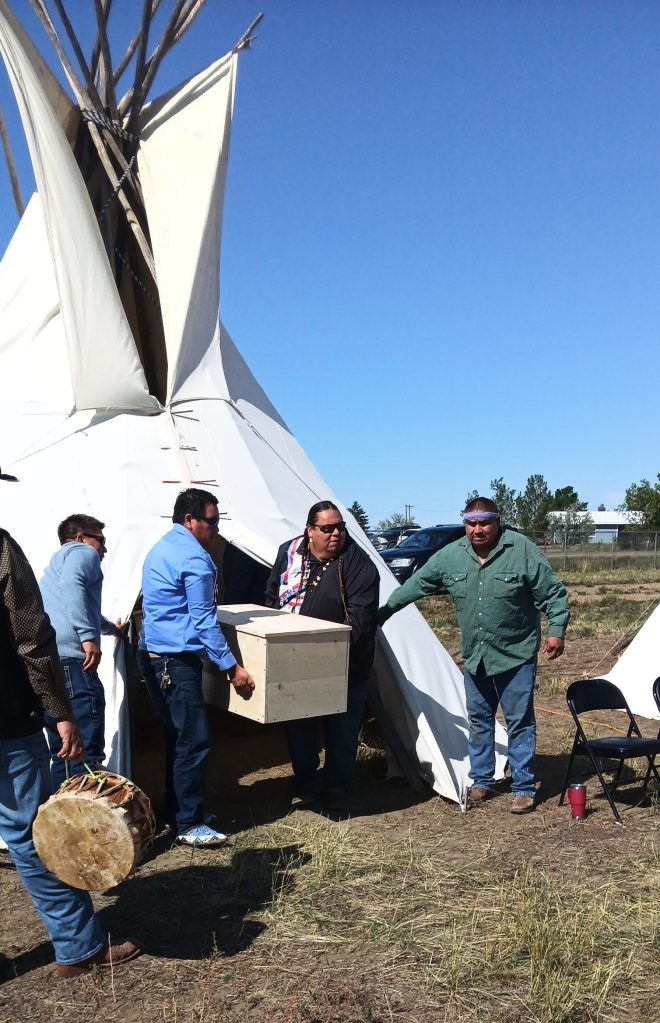
Former Fort Peck Tribal Chairman Justin Gray Hawk Sr. and current Tribal Executive Board member Barry Bighorn carried one of the burial boxes into the tipi beneath a star quilt. Then they brought in the other.
Peter Howe and Richard Morgan were finally here.
Both boys had died at Carlisle more than a century ago. Neither is known to have living relatives today.
But from the moment they arrived, they were not treated as children without family.
Inside the tipi, prayers were offered. Sage was burned. Cedar was placed on the fire.
Michael Black Wolf, Tribal Historic Preservation Officer for the Fort Belknap Indian Community, was among those who came to support Fort Peck. He placed star quilts over the boys.
Fort Peck had done something similar for Fort Belknap only a few years earlier, when children being returned to that reservation passed through our homeland on their journey home. People here came out to welcome them and show support because Fort Peck understood what it meant to bring children home from a boarding school cemetery.
Now it was our turn.
After the prayers Tuesday night, the mood inside the tipi eventually changed.
People started teasing one another.
Someone made a joke.
Then another.
Soon there was laughter.
It wasn’t disrespect.
It was Indian people being Indian people, even in the middle of grief.
The next day, Dylan Youpee would put words to exactly what had happened inside that tipi.
“As Indian people, we use that humor as a form of healing,” Youpee told the crowd gathered for the burial. “That’s how we cope with our anger. That’s how we cope with our sadness.”
He spoke about the Carlisle delegation going through tears and prayer before eventually sitting together, laughing, teasing one another and giving hugs.
That was exactly what I had watched happen around Peter and Richard the night they came home.
When everything was settled, I left.
Someone remained with the fire through the night.
The next morning
I returned Wednesday morning with my boss, Kristofer.
The man I had left there the night before was still there.
The fire had burned through the night, but the wood supply was getting low. There was still cardboard nearby, so I went back to work and built the fire up again.
People began coming and going.
Some entered the tipi quietly to pay their respects. Others helped prepare the grounds for the funeral. Tribal Enterprise had already dug two graves in front of the repatriation cemetery.
I had gone out that morning dressed the way people around Fort Peck normally see me when I am working: black shirt, red tie and red shoes.
Before we left for the school, Dyan Youpee handed me an orange shirt.
I put it on.
For weeks I had photographed orange shirts, orange flags and people preparing for these children to come home.
Now I was wearing one.
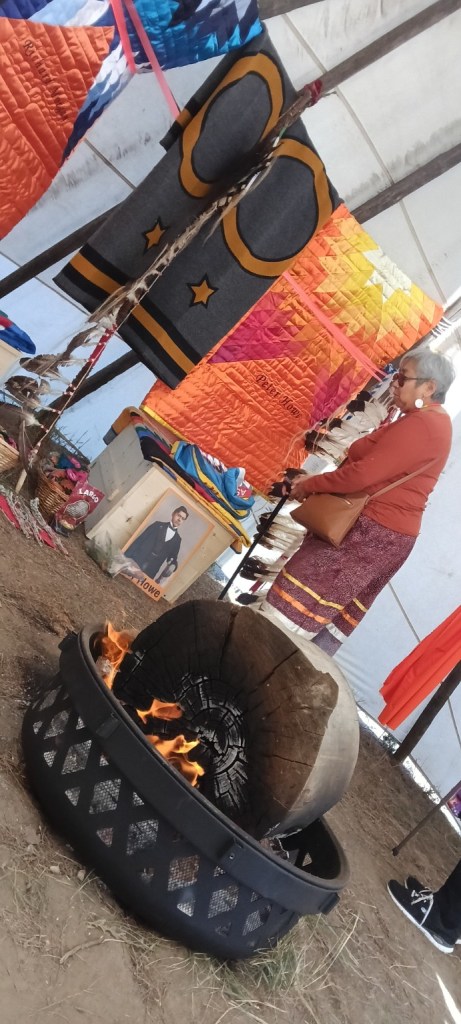
Before the procession began, however, I went back inside the tipi.
This time I was alone.
Peter and Richard were there in front of me.
For weeks, I had covered their story. I had learned their names, followed their journey and tried to make sure people knew who they were.
Standing there with them, none of that felt like ordinary reporting anymore.
I told them I was sorry.
I told them I wished they could have lived their lives here.
They were children when they were taken away. What happened to them was part of an effort to destroy Indian people and Indian families.
I told them that effort failed.
We are still here.
Their people are still here.
And although neither Peter nor Richard has known living relatives, I told them that didn’t mean they had no family.
Fort Peck was their family now.
I am 43 years old. They will forever be remembered as teenagers.
So I told them I supposed that made me old enough to be their uncle.
That was when it became difficult to hold back the tears.
I told them I had spent weeks covering them. I told them I had tried to make sure people remembered their names.
Then I left them there for the last time before their burial.
An orange procession
The community gathered at the school before traveling to the cemetery.
Young runners wore orange.
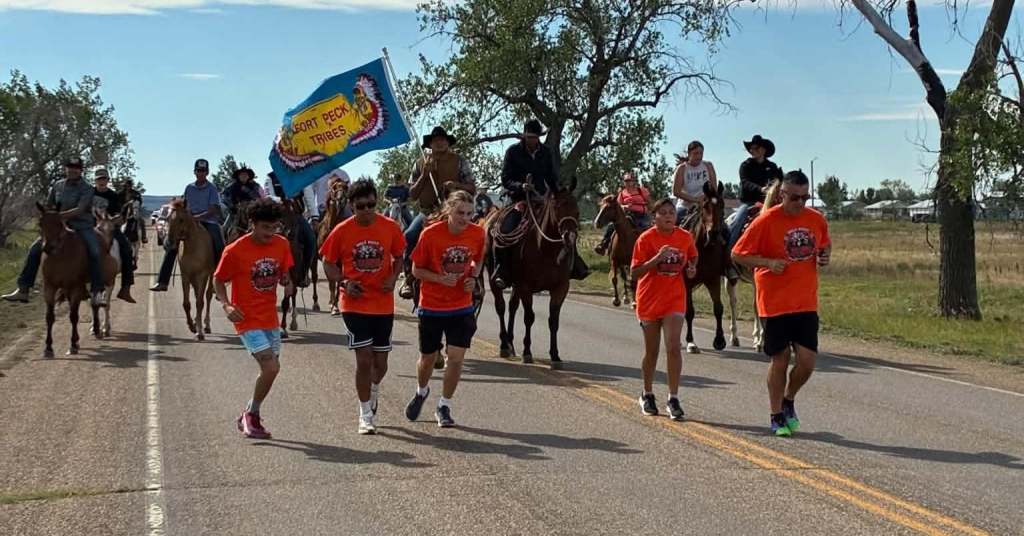
Horseback riders followed carrying flags.
Law enforcement led the way, followed by the Poplar Volunteer Fire Department’s unmistakable orange fire truck, known locally as the Mean Pumpkin.
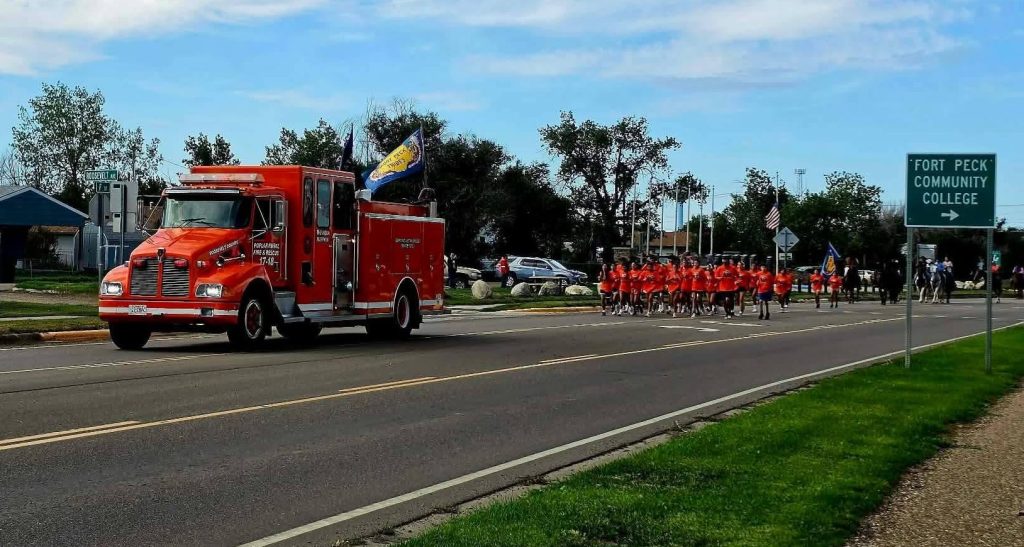
In Dyan Youpee’s vehicle, children held up the orange Fort Peck Tribal flag.
That flag had taken on special meaning during the weeks leading to the children’s return.
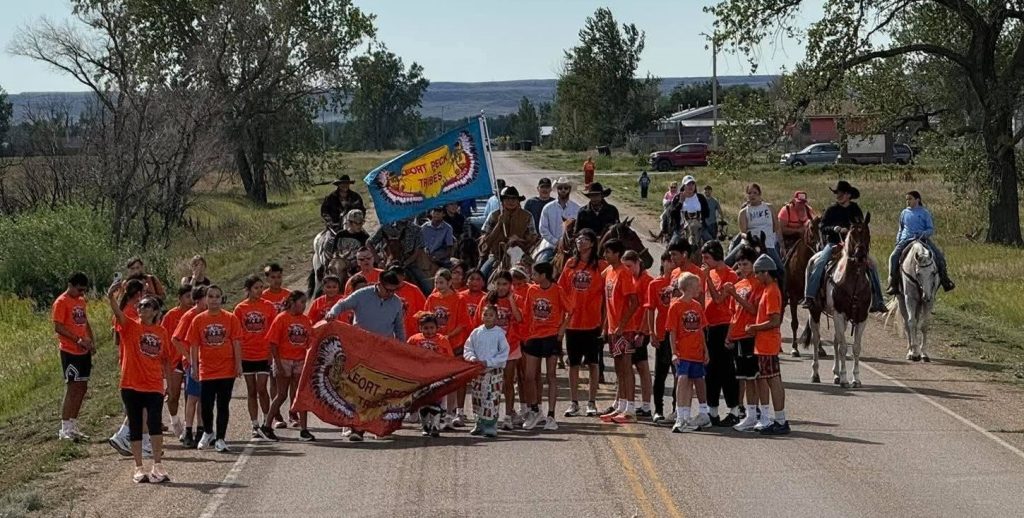
The procession traveled from the school toward the repatriation cemetery, carrying Peter and Richard toward the place where they would finally be buried in their homeland.
When we arrived, two veterans stood near the open graves.
Terry Martinez and Cody Eagleman wore war bonnets and held eagle staffs beside the burial area.
A pipe ceremony was held. Photography and recording were not permitted during that portion, and cameras were put away.
Then people gathered for the public remarks.
“These are your relatives”
Dylan Youpee spoke directly to something many people had been thinking about Peter and Richard.
They came home without known descendants.
Who, then, were their relatives?
Youpee’s answer was simple.
“These are your relatives,” he said.
“If you’re from Fort Peck, if you grew up in Brockton, Fort Kipp, Poplar, Wolf Point, Oswego, Frazer, anywhere on Fort Peck, you’re our relative. That’s the way it is. You’re our relative.”
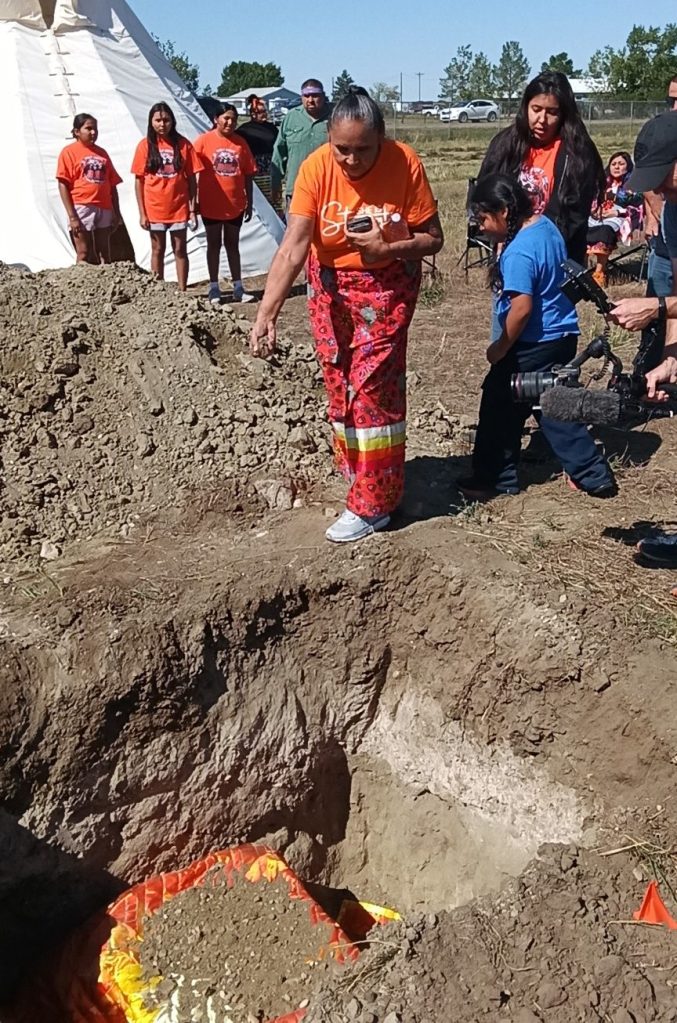
He invited everyone present to participate when it came time to bury the boys.
Grab some dirt, he told them.
Say a prayer.
Put it in their graves.
Former Chairman Justin Gray Hawk Sr. then spoke about the long effort required to return Fort Peck’s children and cultural items home.
There had been paperwork, phone calls, Zoom meetings, visits to Washington, D.C., and meetings with senators.
He also spoke plainly about what boarding-school children endured.
“We talk of the struggles, the suffering, the torture, all of these things,” Gray Hawk said. “They are not forgotten. It’s not unseen. We know.”
The effects, he said, did not end with the children who were taken.
“Our families struggle every day because of what had happened to our relatives long ago.”
Former Tribal Executive Board member and longtime powwow announcer Tommy Christian also spoke.
Christian reflected on what the return of the three children — Peter, Richard and Christine Redstone — had caused him to examine within himself.
“One of those virtues of life is forgiveness,” he said.
Christian spoke about struggling with trust and said the children’s return helped him bring those feelings to the surface and deal with them.
“I want to thank these three individuals for giving me that opportunity,” he said.
Then it was time.
One handful at a time
Peter Howe and Richard Morgan’s burial boxes were clearly marked with their names.
Each was wrapped in a star quilt donated by the Wolf Point Community Organization.
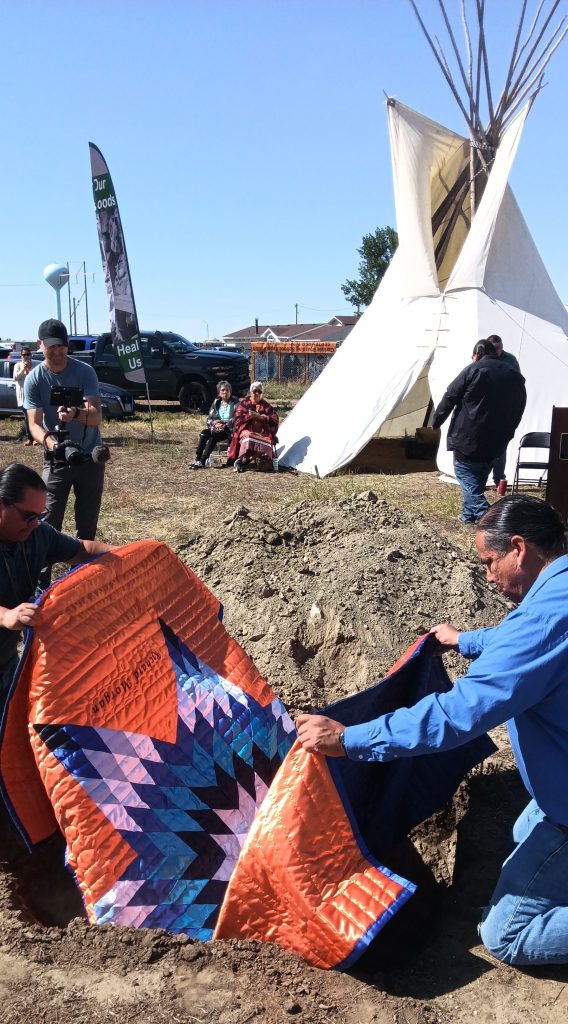
The boys were lowered into their respective graves.
A memorial song was sung — one I have only ever heard at funerals.
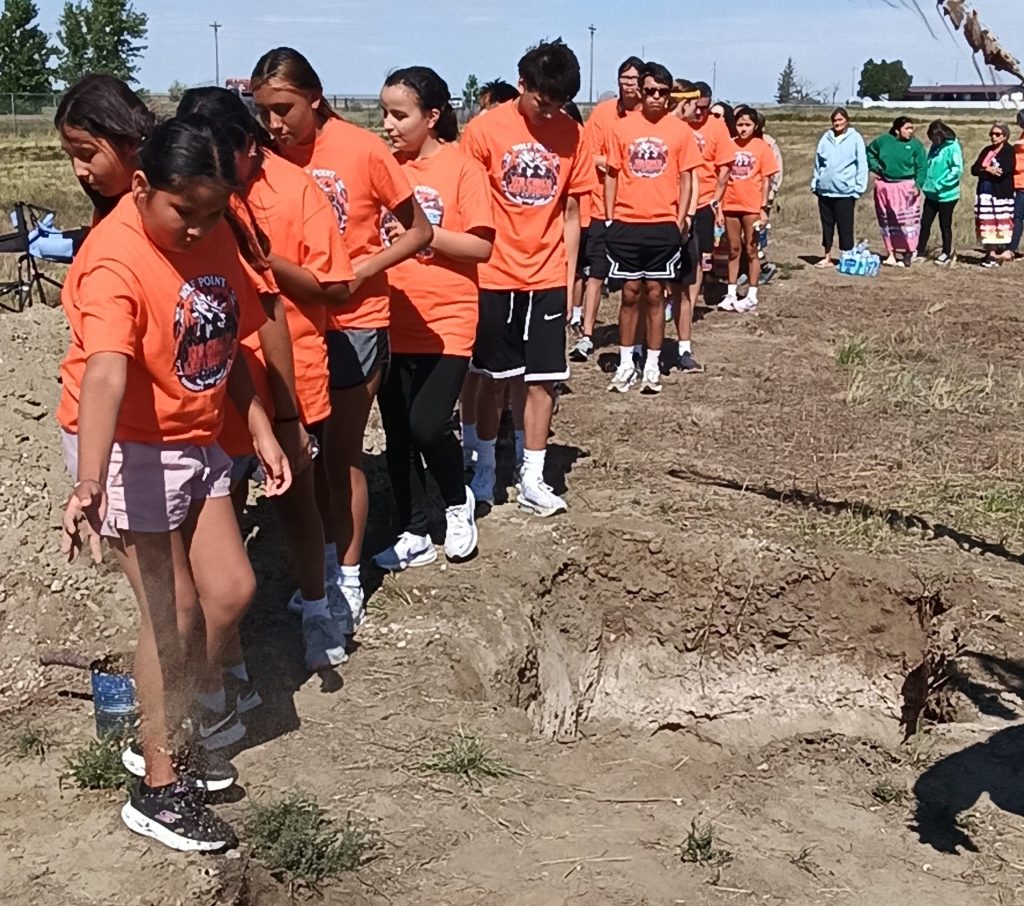
Then came the final line of people.
It was long.
Very long.
People approached the graves one after another.
They reached into the piles of earth beside them, took a handful and dropped it onto one of the boys.
Then they walked to the second grave and did the same.
A handful for Peter.
A handful for Richard.
A prayer.
Then the next person.
And the next.
Dylan Youpee sang as people continued filing past.
There were children, adults, elders and community members.
Earlier he had told everyone that these boys were our relatives.
Now Fort Peck was showing what those words meant.
Neither boy had known living family members standing at the graveside.
Instead, an entire community stood there.
Near the end of the line, I stepped forward.
I took dirt in my own hand.
I placed some into Peter Howe’s grave.
Then I walked to Richard Morgan’s grave and did the same.
I was still wearing the orange shirt Dyan had given me that morning.
Watching everyone come forward had already gotten to me.
There was something overwhelming about seeing such an outpouring for two boys who had been gone for more than 135 years.
What happened to them came from an incredibly dark period in our history.
Nothing done Wednesday could erase what happened.
It could not give them back the childhoods they lost.
It could not give Peter and Richard the chance to grow old.
But they were no longer buried in Pennsylvania, far away from their homeland and their people.
They were here.
They were home.
When the last people finished paying their respects, several young men were called forward from the crowd.
They picked up shovels.
Tribal Enterprise had used machinery to prepare the graves, but machinery did not finish them.
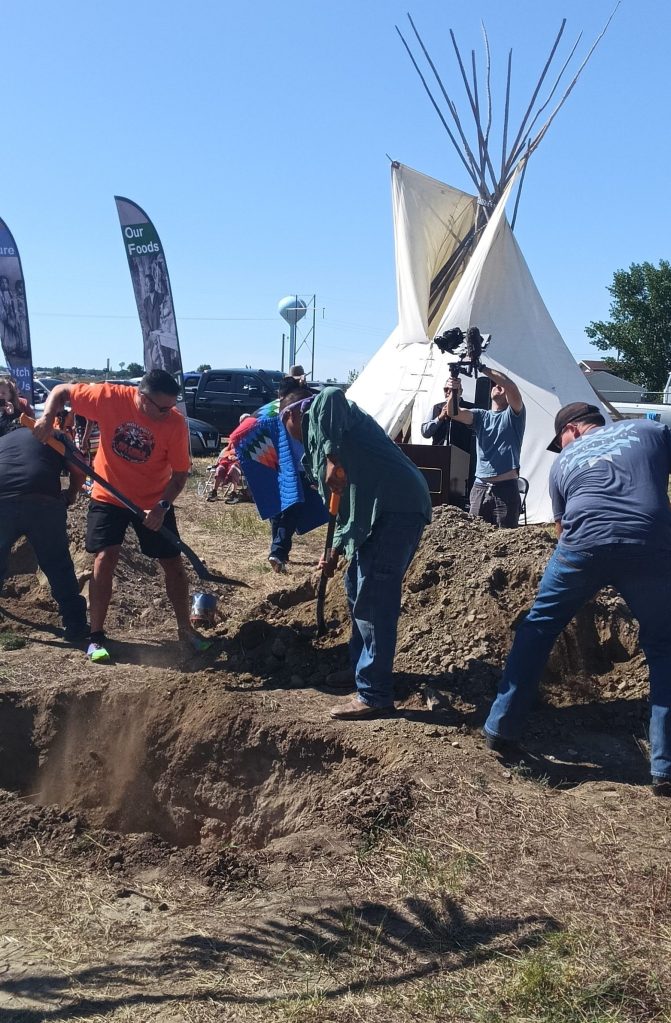
The young men did.
They shoveled earth into the graves quickly, one load after another, until Peter and Richard were completely covered.
Then it was over.
People shook hands.
Some embraced.
Slowly, everyone began leaving the cemetery.
Peter Howe and Richard Morgan stayed behind.
For good.
A feast for the two boys was scheduled Wednesday evening at the Poplar powwow grounds.
Elsewhere, another family and another community gathering were beginning.
Christine Redstone, the third Fort Peck child returned from Carlisle this week, was to be remembered at her wake Wednesday night before her burial Thursday in Wolf Point.
Peter and Richard came home without known living relatives.
But Dylan Youpee had already told us what that meant.
Nothing.
Because if you are from Fort Peck, you are their relative.
On Wednesday, Fort Peck buried its boys.



Leave a Reply